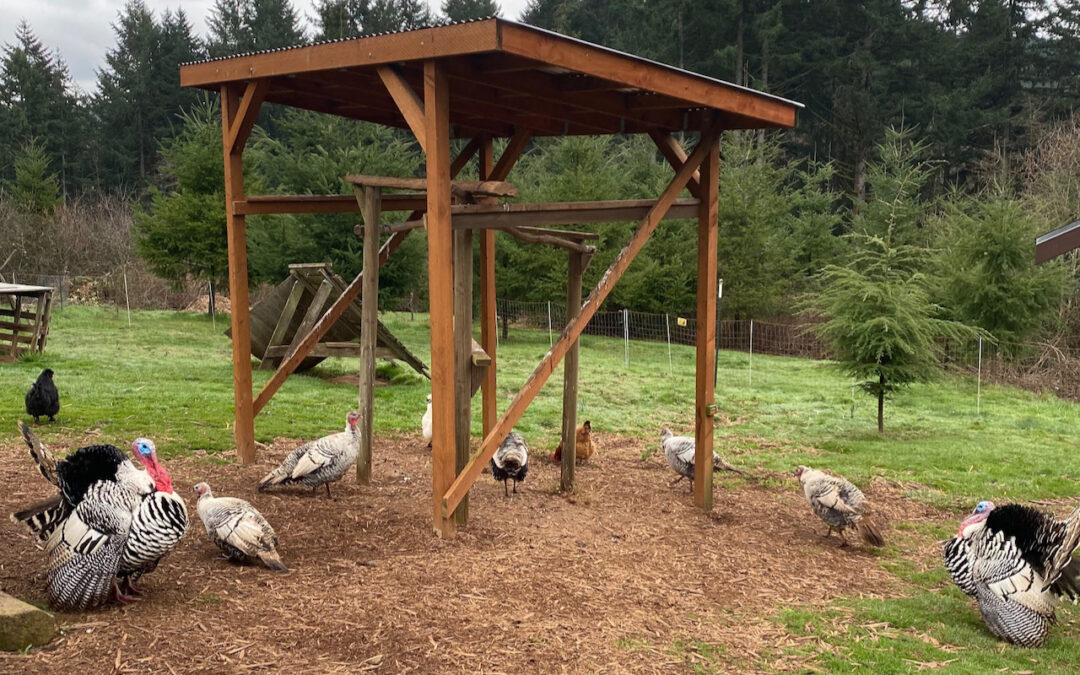
Turkeys instinctively want to roost up high with a good view of their surroundings. They often prefer to sleep out in the open and tend not to like sleeping in enclosed spaces. If you design a turkey shelter with their preferences in mind, you’ll have a better chance that your turkeys will use it as intended instead of ignoring it or sleeping on top of it.
Do Turkeys Need a Coop?
Turkeys do not necessarily need a traditional enclosed coop; in some circumstances, an open-sided shelter may be a good option. The decision about what type of shelter to provide for your turkeys depends on several factors. Are you planning to raise production turkeys for the Thanksgiving table, or will you keep Heritage turkeys year-round? Do you intend on providing nighttime protection from predators by keeping your turkeys in a secure fenced yard or by keeping a livestock guardian dog? If you don’t intend to keep turkeys through the winter or if they have a secure yard to sleep in, they may not need a coop. Adult birds can live comfortably outdoors in most climates provided that they have shelter to protect them from bad weather.
If you are just getting started with turkeys and will be raising them from poults, then you will definitely need to provide a safe coop for your young turkeys at night. However, if you are adding turkeys to your flock that are already a few months old and that may not be accustomed to sleeping in a coop, it may not be easy to train them to sleep indoors.
Housing Design Considerations for Turkeys
The most important things to keep in mind when designing a turkey shelter are that turkeys like to roost high off the ground in a location where they can see and not feel caged in. It also helps to be flexible and be prepared to modify the type of shelter you provide for your turkeys once you begin to understand their night-time roosting behaviors.
Elements of a Successful Shelter:
• High roof
• Unobstructed view of surroundings
• Good ventilation
• Multiple roosts at varying heights
For the best chance of success when training your turkeys to sleep indoors, provide a shelter with a high roof and a spacious interior—more like a barn than a traditional coop. In fact, an existing barn or a large storage shed may be the perfect place to lock your turkeys in safely at night. When repurposing an existing building, consider replacing a wall or a section of a wall with hardware cloth to give it a more open appearance. If you are building new housing, consider incorporating one or more screened sides to give it the open-air feeling and line of sight that turkeys crave. Plentiful ventilation is also important to prevent moisture from becoming trapped inside, as well as to prevent their housing from becoming too hot in the summer, which is another benefit of incorporating screened walls.
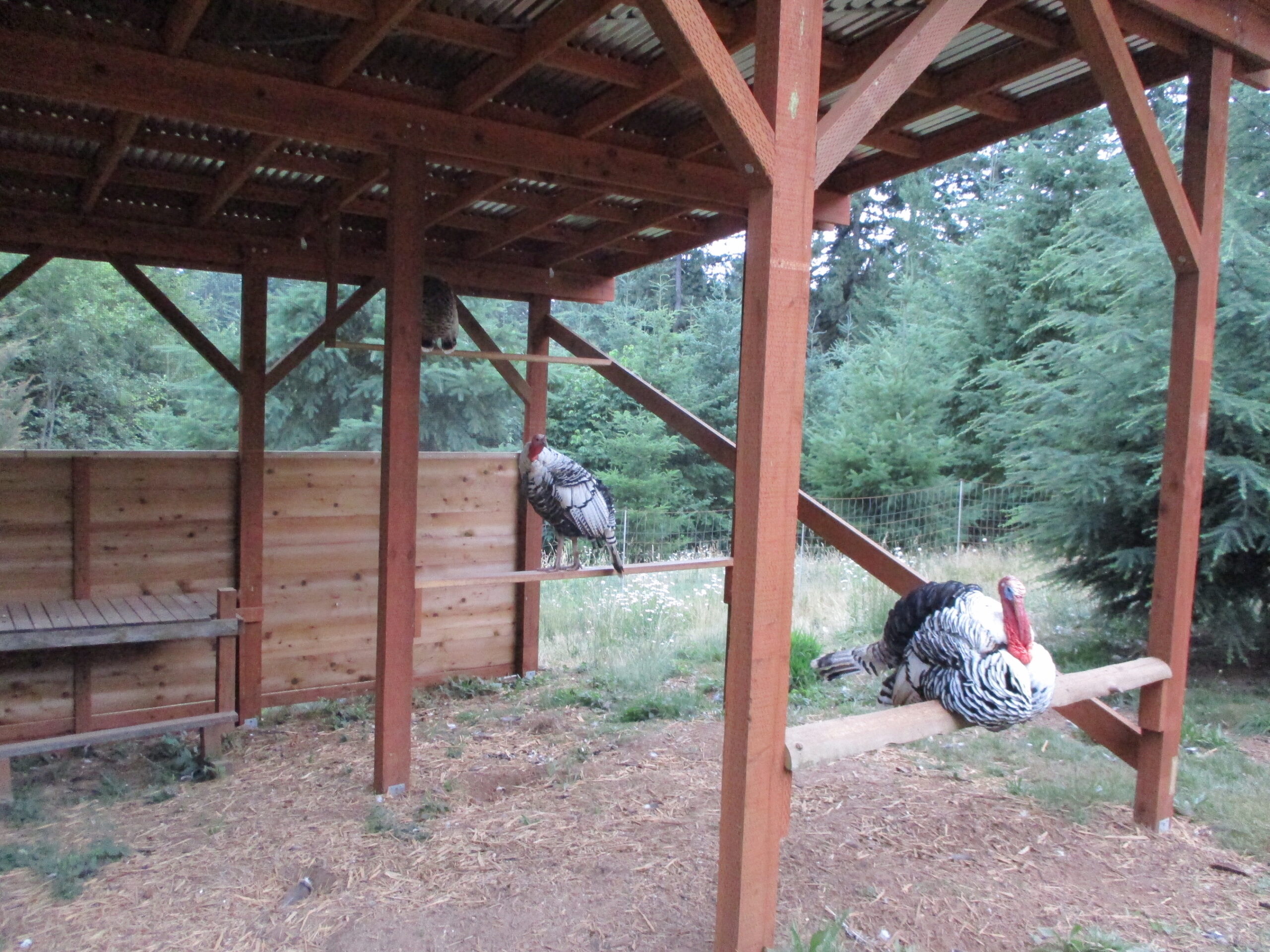
Most turkeys like to roost high, and they can easily fly up to a six foot roost. Some turkeys will first fly onto a lower roost, and then fly up to progressively higher roosts if they are available. In most situations, I recommend a lower roost that is three to four feet off the ground; the highest roosts should be six or seven feet off the ground. For heavier production breed turkeys, it’s a good idea to provide lower roosts, no more than 18 inches off the ground, to prevent injury to their legs or feet when they jump down.
Simple Turkey Shelters
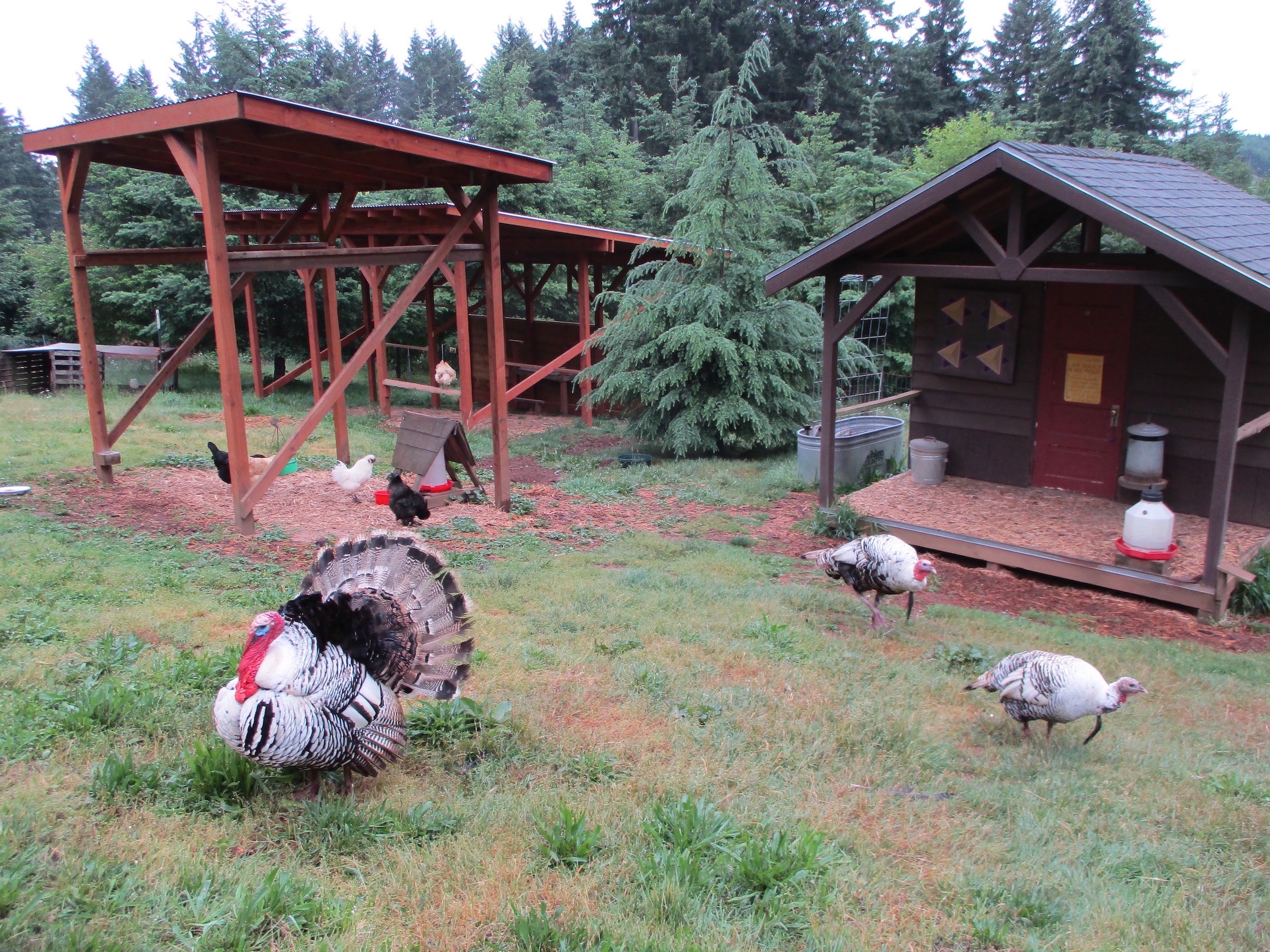
A simple nighttime roosting structure without any walls is another option to consider if you live in a part of the country with mild winters. A shelter that has worked well for us has several roosting bars about six feet off the ground and a corrugated metal roof. It doesn’t have enclosed sides, but it does provide a roof over their heads to keep them dry if they choose to use it. Of course, there are always one or two that prefer to sleep on top of it in all but the worst weather, but if it’s raining or snowing at night, almost everyone chooses to sleep under the roof.
How Much Outdoor Space do Turkeys Need?
As with any type of poultry, it’s best to provide as much space as you can. This is especially true for turkeys due to their big personalities and their propensity for exploring. Having plenty of space to roam and a variety of vegetation types helps to prevent boredom, which, in turn, helps to keep the peace within the flock. One of the nice things about turkeys is that they are not as destructive to grass and vegetation as chickens are. They will make a few dust baths here and there, but in general, turkeys won’t dig up every square inch of grass as chickens are so fond of doing.
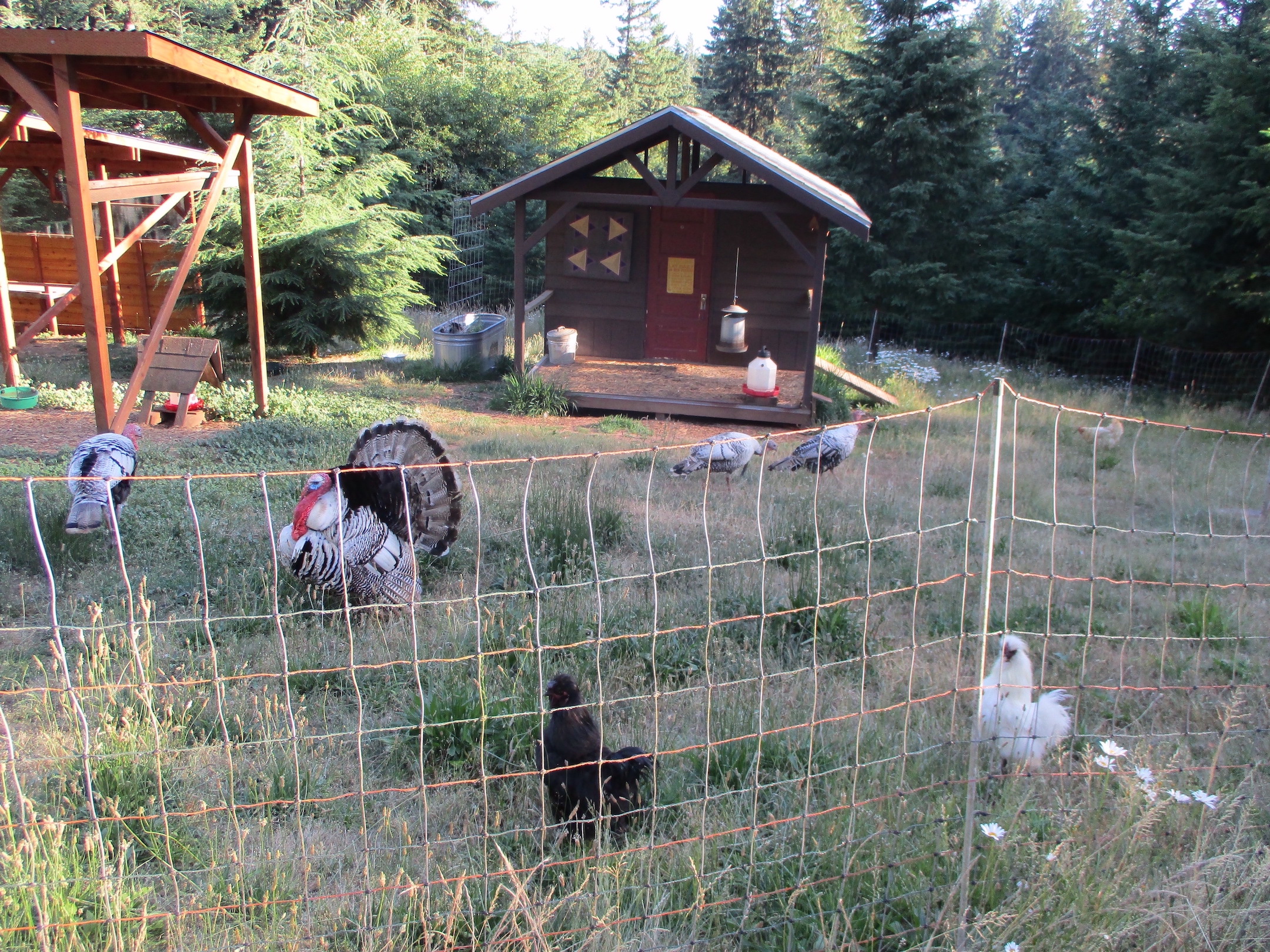
Our fenced turkey yard is approximately 100 feet by 125 feet, or almost a third of an acre, and our flock ranges from 8 adults up to 20 adults and juveniles depending on the season. This stocking rate works well with our yard setup and the pecking order hierarchy. It’s important to keep in mind that what works for one person may not work for everyone. If you are planning to keep more than one tom turkey year-round, your space requirement will depend greatly on their personalities and how well they tolerate each other.
Free Range vs. Fencing
Many people let their turkeys free-range during the day. Turkeys are excellent foragers, although they will still need to be provided with a well-balanced feed to make certain they are meeting their nutritional requirements. Turkeys love to explore their surroundings, and it’s fun to watch them as they enthusiastically go off on an adventure. The risks of the free-range lifestyle can be high, however, especially for young poults, mommas with little ones, and broody hens.
For me, the trade-off between letting my birds free-range and knowing that predators will take their toll is not worth it. I keep my turkeys in a fenced yard surrounded by four foot electric poultry netting. Although turkeys can easily fly over a four foot fence, mine rarely do so. The key is to train them where their home is from the start and provide them with everything they need inside the fence. This will give you the highest likelihood that they will won’t fly out. The size of the yard and our stocking rate ensure that there is always plenty of green grass and lots of opportunities for foraging, and this setup gives them everything they would have if they free-ranged without any of the risk.
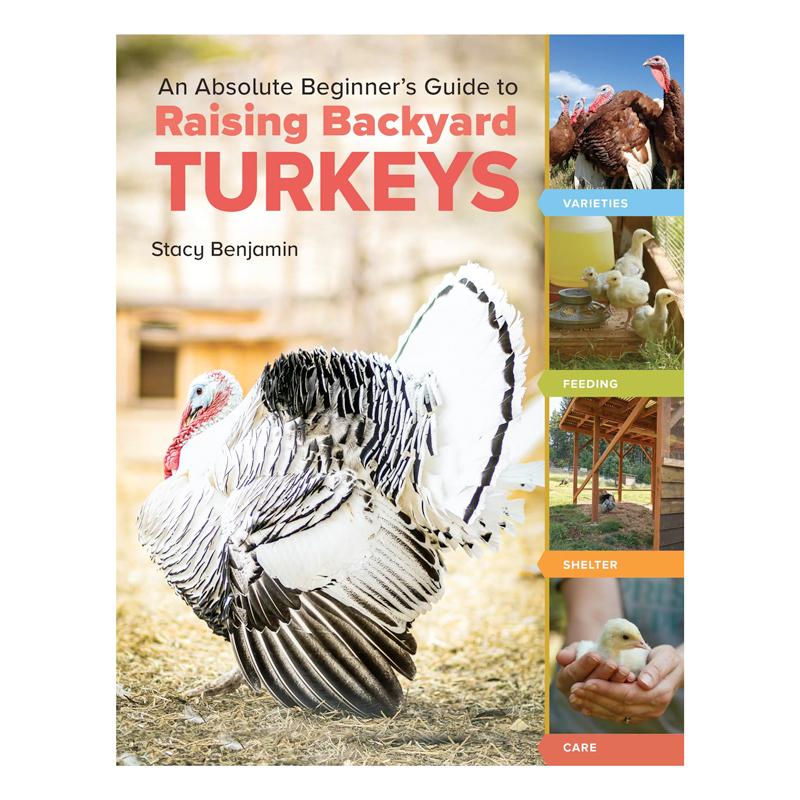
Turkeys are very independent birds, and these tips will set you up for success when housing your turkeys. Find more information about raising turkeys in “An Absolute Beginner’s Guide to Raising Backyard Turkeys” by Stacy Benjamin.
All photos courtesy of Stacy Benjamin.
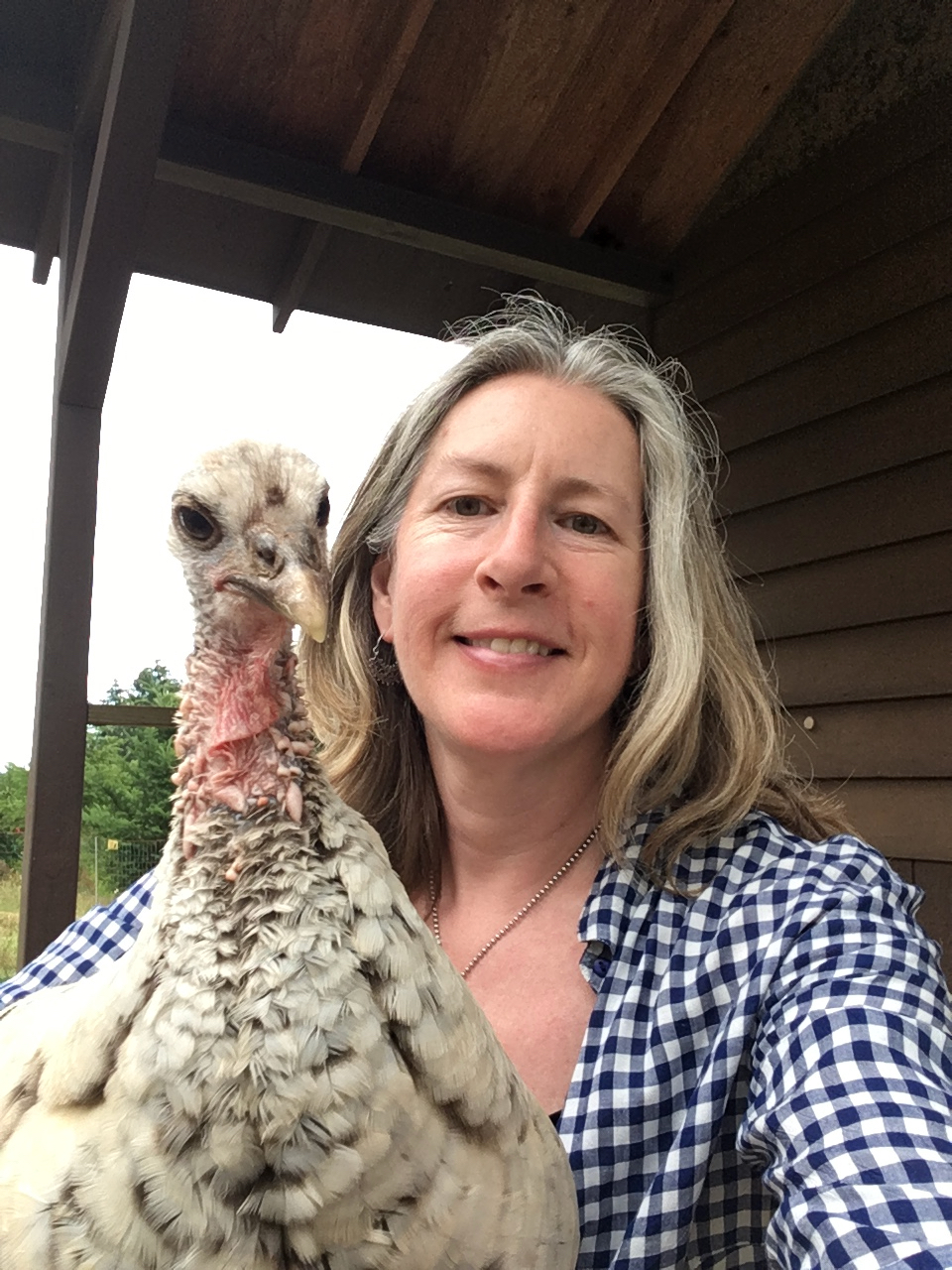
Stacy Benjamin of 5R Farm is a homesteader and author. She and her husband, along with their flock of 4-dozen very spoiled chickens and turkeys, reside on their farm in northwest Oregon. 5R Farm is named after her first five backyard chickens — Rhoda, Raquel, Rosie, Ruby, and Ramona — who she credits with inspiring her move from the city to the country. Stacy is a contributor to Mother Earth News, Countryside magazine, Backyard Poultry magazine, and the author of An Absolute Beginner's Guide to Raising Backyard Turkeys. You can also find Stacy online where shares the antics of her turkeys on her Instagram account @5rfarmoregon, and her website and blog at www.5Rfarm.com.