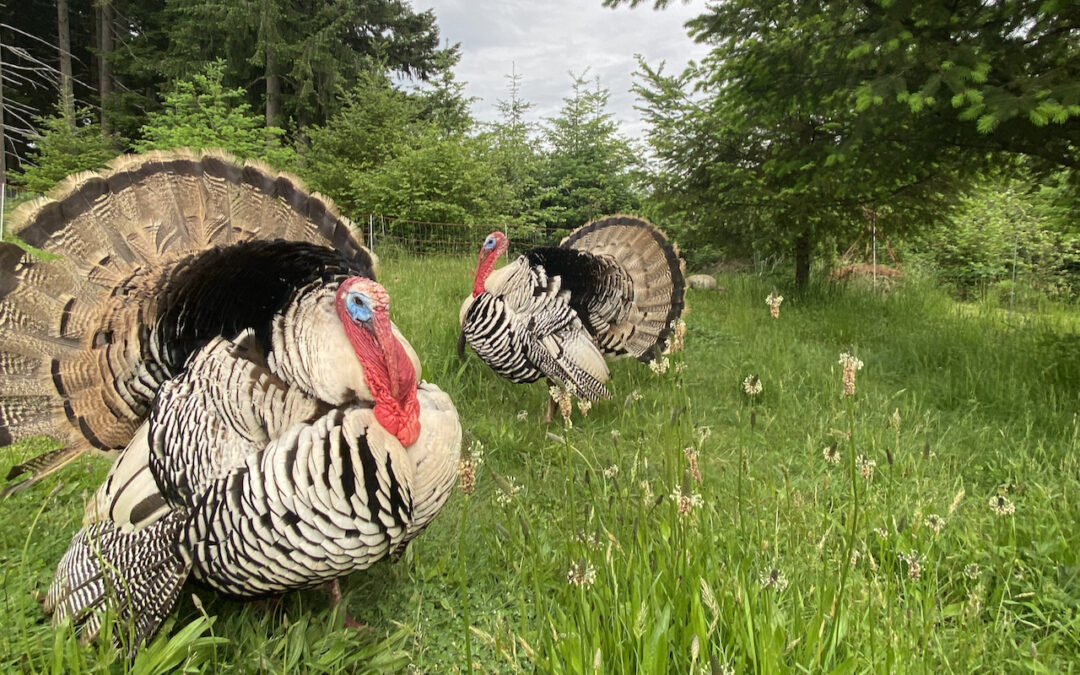
One of the most common reasons people raise turkeys is to provide a holiday centerpiece or a nutritious source of meat for the freezer, but there is so much more to turkeys than simply providing a meal. Turkeys are incredibly charismatic birds that are enjoyable to have around in addition to providing both meat and eggs. In fact, it may surprise you to learn that mature Heritage turkey hens can be very good layers of jumbo-sized eggs. Let’s dive into what you can expect when raising turkeys.
Raising Turkeys is Fun!
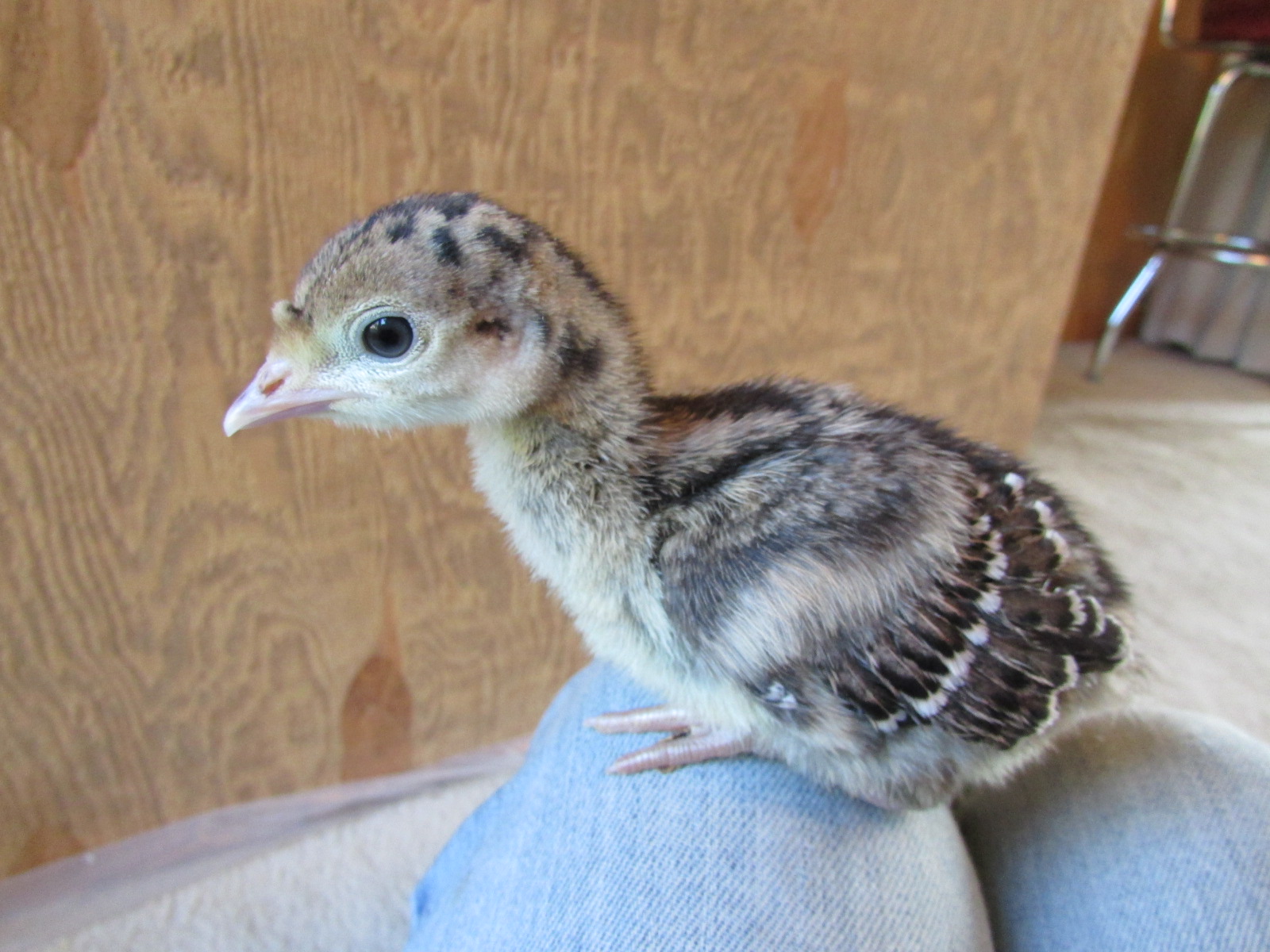
Turkey poults are adorable, and with their big eyes and curious nature, you will likely become attached to them in a hurry. When raising young poults in a brooder, you will notice that they tend to be less skittish than chicks and are easier to pick up. Turkeys that are socialized when they are young will be more likely to approach and interact with you when they are grown, and they will also be easier to handle, so it is a good idea to begin socializing your turkey poults right away.
The inquisitive nature of turkeys means that they are always coming to investigate whatever is happening near them. Farm chores and projects will almost always draw their attention, and soon you’ll have turkey supervisors watching your every move. These amazing birds can become attached to, and even show affection toward, their main caregiver. The day-to-day experience of raising turkeys is very rewarding, and many people form a special bond with their birds. I know quite a few people who intended to raise Thanksgiving turkeys, only to become so enamored with these beautiful birds that they pardoned their intended dinner and gained a farm friend.
Raising Heritage vs. Production Turkeys
One reason to raise Heritage turkeys instead of production varieties is that raising Heritage turkeys gives you more options. There are some important differences to be aware of between Heritage and production turkeys. Heritage turkeys have a slower rate of growth, are capable of natural reproduction, and can live long productive lives. Production turkeys, by contrast, grow quickly, cannot reproduce naturally, and tend to have short lives as a result of their large size.
If you want to raise a self-sustaining flock of turkeys and are also interested in keeping a few year-round, Heritage turkeys are the way to go. Seeing how well-adapted turkeys are to their natural environment through the seasons—nesting and laying eggs in the tall grass in the spring, raising little ones in the summer, and withstanding cold winters and snow like champs — is truly a wonderful part of the turkey experience.
Raising Turkeys for the Table
Production turkeys have an excellent feed conversion ratio, meaning they are efficient at turning food into body weight. Broad-breasted production varieties can weigh as much as 50 pounds at maturity, which is achieved in four to five months. By comparison, Heritage turkeys typically grow to a mature size of 20 to 25 pounds in six to seven months. The better feed conversion ratio of production turkeys compared to Heritage turkeys may be a consideration for those looking to raise turkeys on a larger scale or as a profitable endeavor. However, feed conversion is not the only factor to consider. If you want to keep turkeys for a longer time beyond maturity, Heritage turkeys have the advantage of growing to a healthier weight, and, as a result, have a much longer lifespan.
Turkeys are Foraging Experts
Turkeys are excellent foragers, and they can find much of their daily intake on their own, although they will still need to be provided with a well-balanced feed to make certain they are meeting their nutritional requirements. When allowed to free-range or given access to a productive pasture, turkeys can forage for approximately 50% of their diet from spring through fall. If your objective is to raise turkeys for the table, it is important to provide high-quality feed to supplement their foraging to get them up to weight in a reasonable period.
Raising Turkeys for Eggs
Hens typically start laying eggs in the spring following the year in which they were hatched, usually by the time they reach 10 or 11 months. Just as with chickens, younger turkeys lay more eggs, with production gradually decreasing after a couple of years. You can expect most turkey hens to lay about 100 eggs in their first year, or up to 120 eggs for a good layer. Turkey hens that go broody will lay fewer eggs in a season, but they will still lay a few dozen eggs in the spring before going broody, with another several dozen eggs in the late summer after the brooding cycle has ended.
Did You Know?
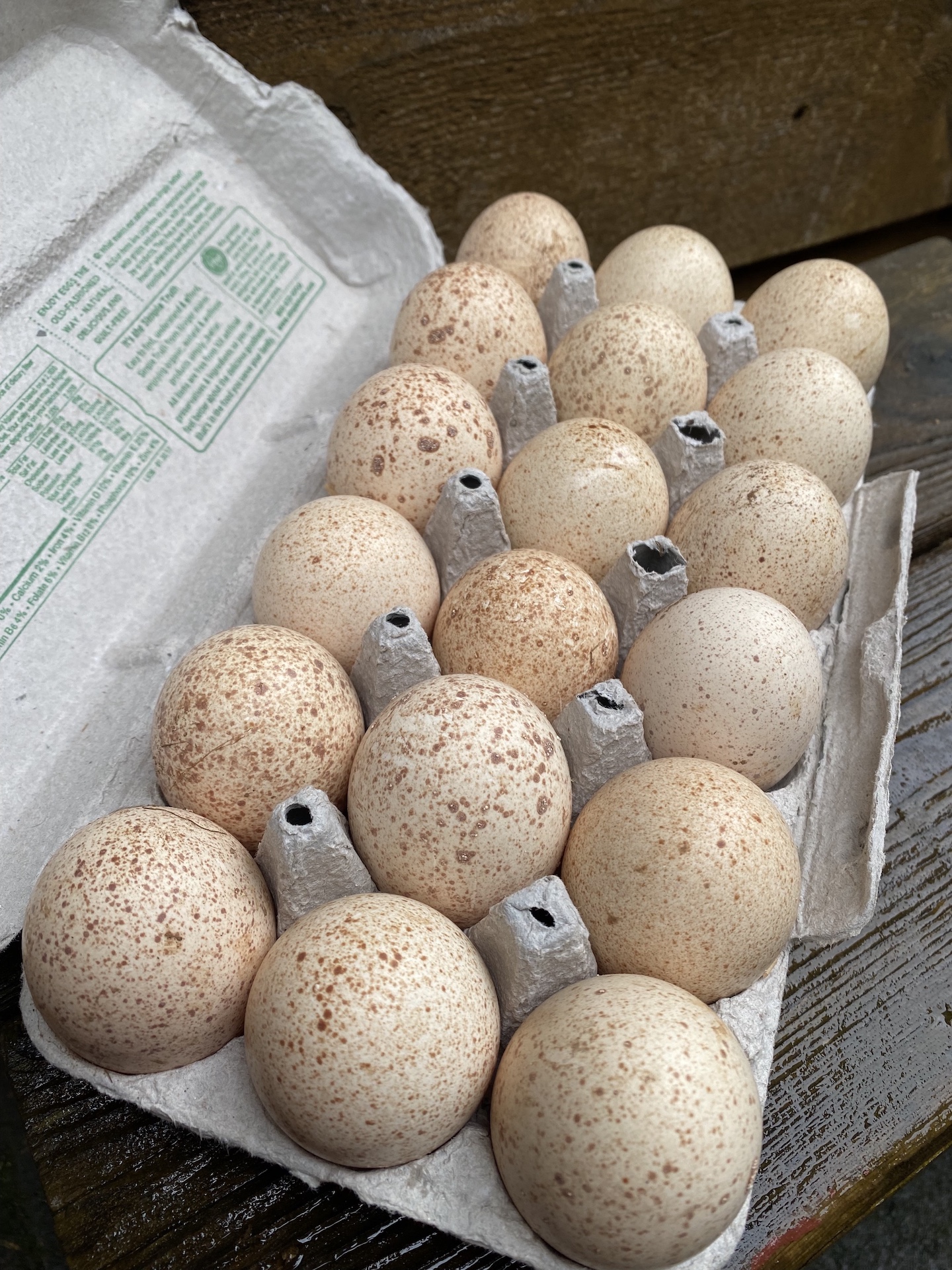
Turkeys have a shorter laying cycle than chickens because they have not been bred to maximize egg production. They generally lay eggs for approximately six months of the year from spring through fall. If you enjoy keeping a variety of poultry breeds for the different colors of eggs they provide, you will appreciate adding beautiful turkey eggs to your egg basket. The eggshells vary from light cream to light tan, and they have lots of light brown speckles. Heritage turkey eggs are on average 50% larger than chicken eggs and generally weigh in the range of 3-3.5 oz,, occasionally being almost 4 ounces. Their eggs are wonderful for cooking and baking. We find the flavor of turkey eggs to be indistinguishable from that of chicken eggs, and we enjoy eating turkey eggs in all the same ways that we use chicken eggs.
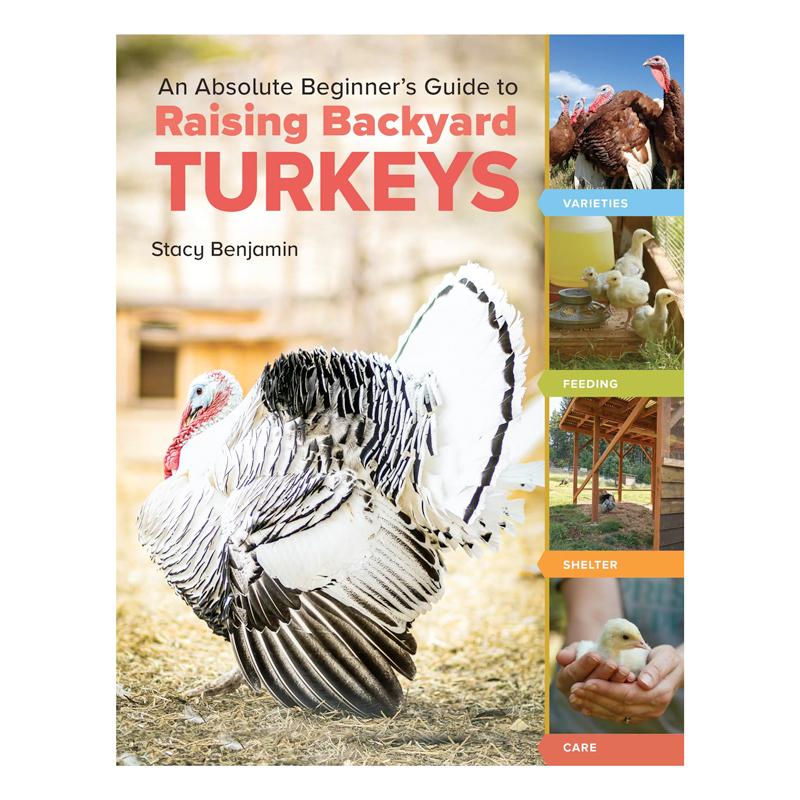
No matter your reason for deciding to raise turkeys, you will find them to be an enjoyable addition to the homestead. Find more information about raising turkeys in “An Absolute Beginner’s Guide to Raising Backyard Turkeys” by Stacy Benjamin.
All photos courtesy of Stacy Benjamin.
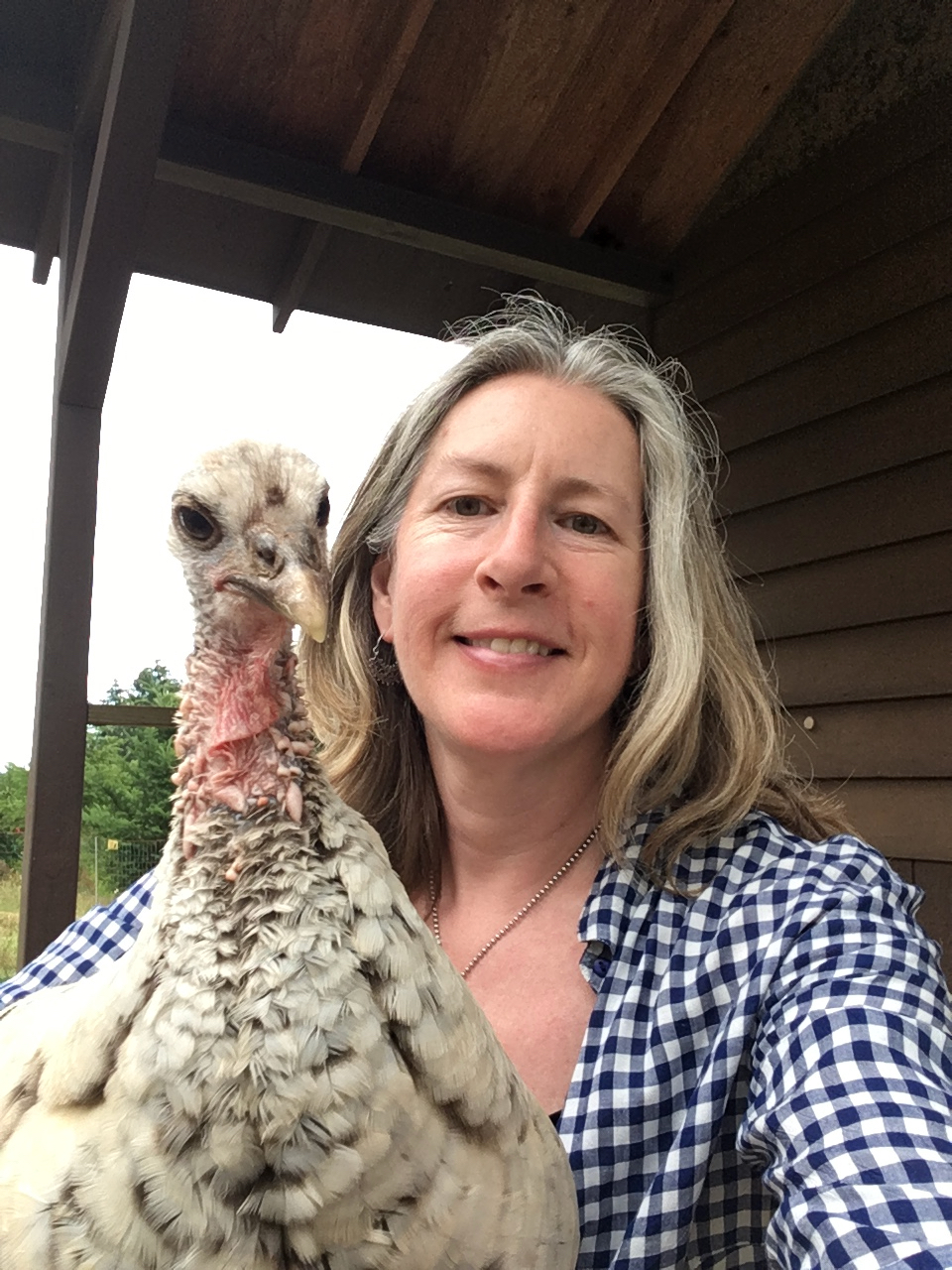
Stacy Benjamin of 5R Farm is a homesteader and author. She and her husband, along with their flock of 4-dozen very spoiled chickens and turkeys, reside on their farm in northwest Oregon. 5R Farm is named after her first five backyard chickens — Rhoda, Raquel, Rosie, Ruby, and Ramona — who she credits with inspiring her move from the city to the country. Stacy is a contributor to Mother Earth News, Countryside magazine, Backyard Poultry magazine, and the author of An Absolute Beginner's Guide to Raising Backyard Turkeys. You can also find Stacy online where shares the antics of her turkeys on her Instagram account @5rfarmoregon, and her website and blog at www.5Rfarm.com.