
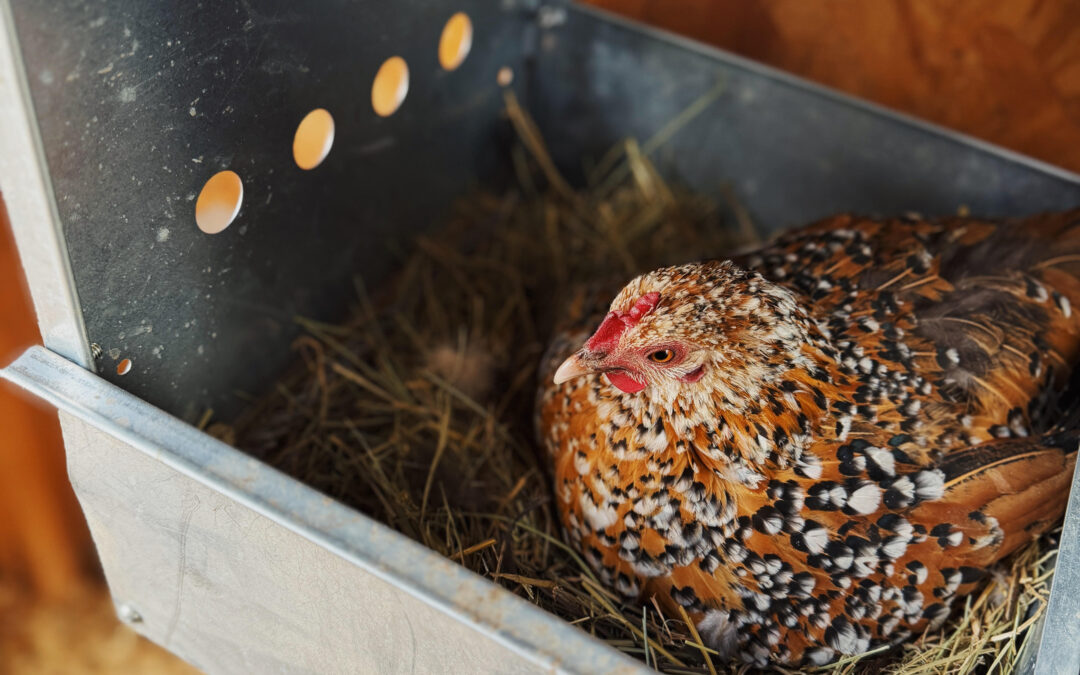
One way to increase your backyard chicken flock is by using broody hens. Continuing our interview series with Gail Damerow, poultry expert and best-selling author, we ask her about using broody hens to hatch and raise baby chicks.
What are the advantages of using broody hens?
When you have mature chickens and want more, the cheapest and easiest way is to let your hens do the hatching. Using broody hens is less time-consuming than hatching in an incubator, and it’s often more successful.
What do you need to get started?
You basically need two things: fertile eggs and a broody hen. If you have a rooster, you can hatch eggs laid by your own hens.
Do all hens brood?
No. Some hens never brood. Others seem to always be broody. You can’t tell for sure that a particular hen will make a good broody until she does. But you can get a pretty good idea based on the past records for the breed as a whole
Which breeds are most likely to brood?
Among the large breeds, Buff Orpingtons and Light Brahmas are usually reliable broodies. Of the bantams, you might look at Silkies.
Cochins of either size also make great broody hens. Over the years, I’ve kept Buff Orpingtons, as well as Cochin and Silkie bantams, and they were always excellent mothers.
What triggers broodiness?
Broodiness is triggered by the hormone prolactin. The pituitary gland releases this hormone when day length increases.
Most hens therefore brood in spring or early summer. Some chickens may brood in late summer or early fall. Very few will brood at any time of year.
What signs indicate that a hen is broody?
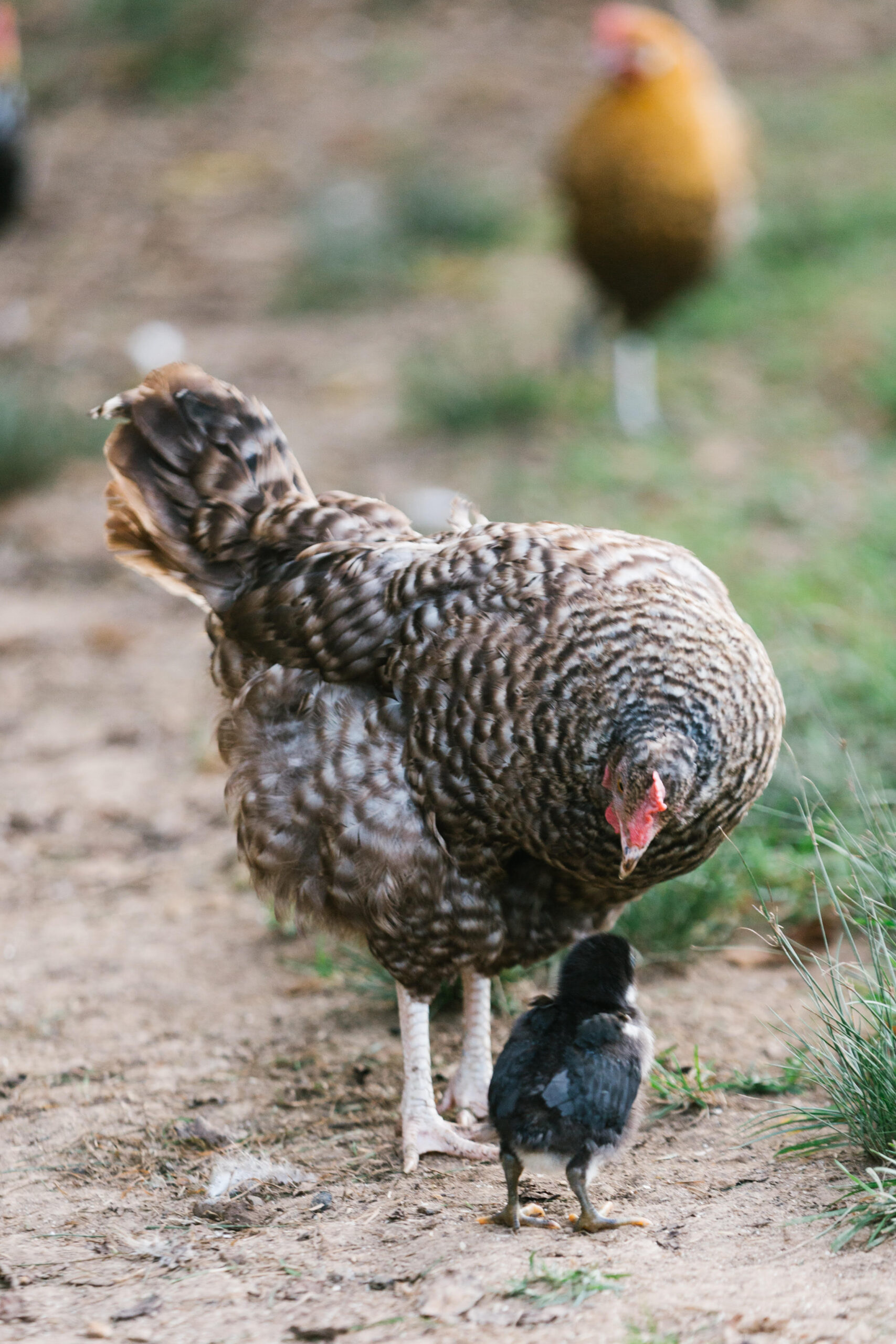
To test a hen for broodiness, gently reach under her, as if to remove her eggs. A hen that’s thinking of brooding will puffs out her feathers, peck your hand, or growl at you.
Clucking is another sign of broodiness. Many hens don’t cluck until their eggs are ready to hatch. But some start clucking almost as soon as they start setting.
How should you care for a brooding hen?
Move her to a quiet place where she won’t be disturbed. The protective place should have these features:
- Isolated from other chickens
- Predator proof
- Well-ventilated
- Away from wind, rain, sun, and extreme temperatures
- Somewhat darkened
- Big enough for the hen to fully fit and turn around
- Tall enough for her to sit upright
My barn has four built-in 3-foot by 4-foot heated brooder boxes for raising chicks. With the heaters off, they are perfect for housing broody hens.
Each unit can accommodate a hen nesting in a back corner, with a feed and water toward the front. This set-up also offers plenty of room for chicks during their first few weeks.
How hard is it to move a broody hen?
Most broody hens are easy to move, especially if they’ve hatched chicks before. You want to move the hen and eggs — as quickly as possible — at night after dark. Then, leave her alone to get settled. Have feeders and drinkers already in place, and filled with enough to last at least a full day.
For a first-time broody, try to move the entire nest along with her, using something like a pet carrier. If she is not already nesting in the pet carrier, first move her into the pet carrier and put it where she started to brood. Once she settles down in the carrier, move it at night to a private place.
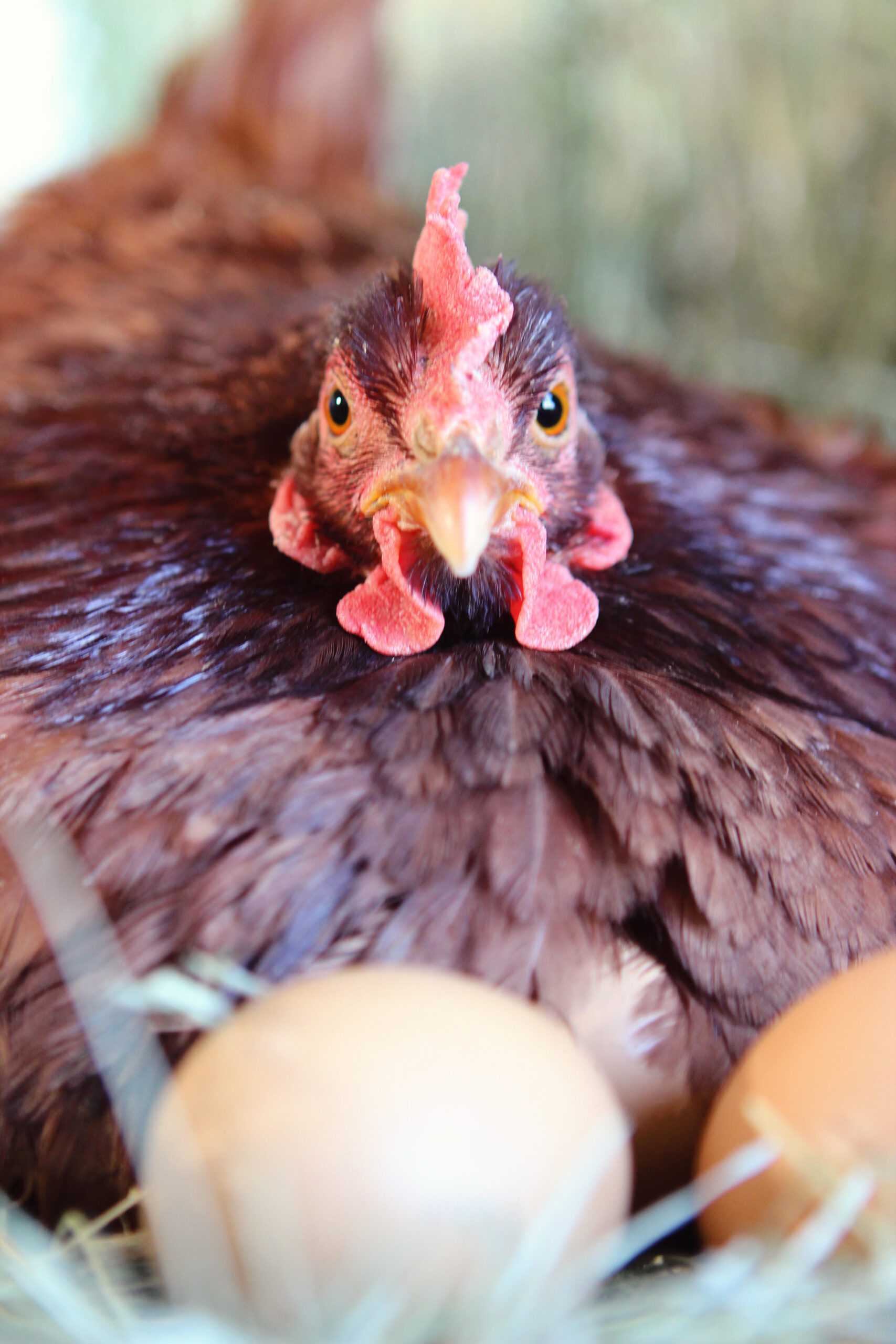
What about using broody hens to raise chicks they didn’t hatch themselves?
Sometimes that works, especially if the hen has been setting for several days and you slip the chicks under her after dark. Also, the chicks should be not much more than a day old, when they’re still young enough to imprint on their new mom.
You might even induce a non-broody hen to raise a chicks if you know she is a good mother. Put the hen and chicks together in a dimly lit brooding pen. Watch for these typical signs the hen will care for the chicks:
- She spreads her wings to cover the chicks.
- She sounds the food call while picking up and dropping bits of starter (tidbitting).
- The hen rushes toward any chick in distress.
- She clucks almost continuously.
Once a hen hatches or accepts chicks, how do you care for them?
Feed the whole crew starter ration. It won’t hurt the hen, but the high calcium content of layer ration can harm the chicks.
Initially feed them in a large, open pan the chicks can walk and scratch in. When you switch to a regular feeder, if necessary fasten it to a sturdy base so the hen can’t knock it over.
You’ll also need a 1-gallon drinker or other container the hen can’t knock over. For bantams, put marbles or clean gravel in the rim so they can’t get into the water and chill or drown.
Using a broody hen seems easy.
It is. Compared to using an incubator, the hens control temperature and humidity, and egg turning. And then they safely raise the chicks. All you need to do is make sure they are in a clean, safe area with plenty of feed and water.
To learn more about how Gail Damerow hatches and broods her own chicks, check out this video.

Gail Damerow has been keeping chickens for nearly 50 years and has written several books about them including Storey’s Guide to Raising Chickens, The Chicken Health Handbook, The Chicken Encyclopedia, Hatching and Brooding Your Own Chicks, and What’s Killing My Chickens. For more about Ms. Damerow, visit her blog at GailDamerow.com.
Gail Damerow’s headshot courtesy of Kathy Shea Mormino.
Featured image and image of a hen with a chick courtesy of Nina Mullins.
Shop These Best-Selling Books by Gail Damerow
Storey’s Guide to Raising Chickens

The Chicken Health Handbook

What’s Killing My Chickens