
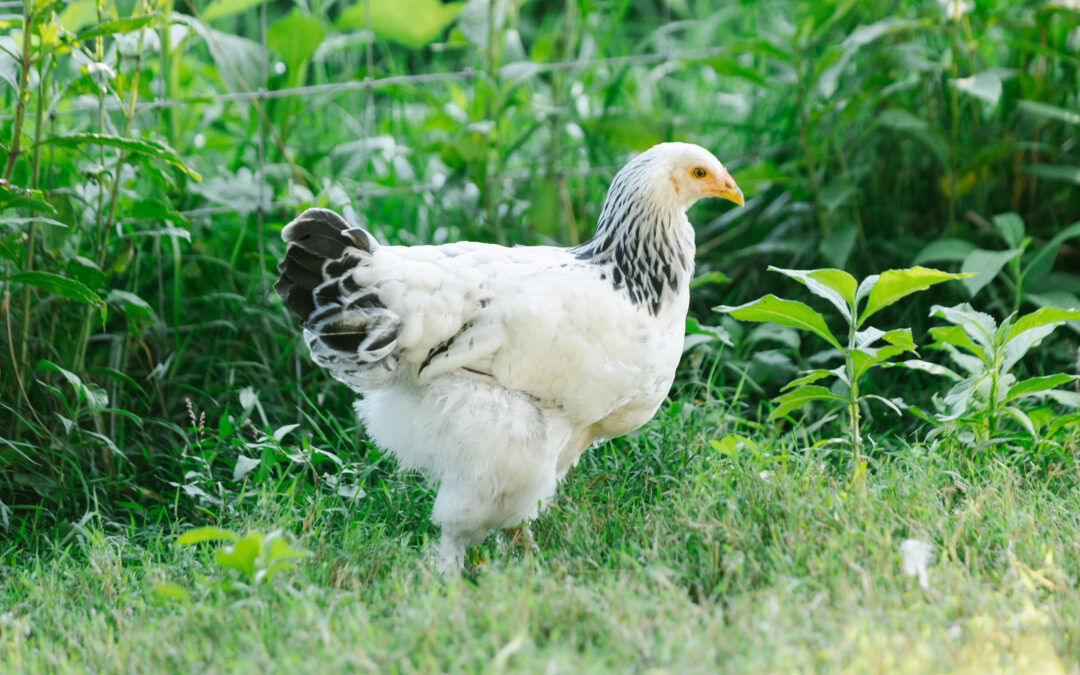
Chickens make a variety of different sounds while engaging in specific activities. Continuing our interview series with Gail Damerow, poultry expert and best-selling author, we ask her for tips that might help us in translating this fowl language.
Do the sounds chickens make correlate to human language?
Some researchers believe that chickens don’t have a language, meaning they don’t actually communicate through the sounds they make. For them, language is an important distinction between humans and other animals.
Other, more enlightened, researchers spend their lives studying the sounds chickens make and seeking to understand what they mean. Anyone who has a flock of chickens recognizes that they are, in fact, communicating in their own way.
But it wasn’t until the 1960s that a man in Germany formally identified 30 distinct chicken sounds and their meanings. Subsequently, an animal behaviorist at Macquarie University in Sydney, Australia, reported that chickens convey information in a complex and sophisticated system paralleling human language.
So fowl language is comparable to human language?
Not exactly, for these reasons:
- Many of the sounds chickens make are instinctive, rather than learned, as in humans.
- Chickens communicate about the present, but not past or future events.
- They also, as far as we humans know, don’t discuss abstract concepts.
- Chickens have a limited vocabulary compared to humans.
Let’s explore the vocabulary of baby chicks.
Okay. A chick instinctively peeps even before it hatches from the egg. After it hatches, it makes sounds that communicate whether it’s either happy or discontent.
The happy sounds tend to swing upward in pitch; the unhappy sounds descend in pitch. It’s like the English word “good” goes up, but the word “pain” goes down.
For instance, when chicks nestle under their mama, they repeat soft sounds of contentment. On the other hand, when they’re cold or hungry, they make loud, sharp sounds of distress.
How about translating the fowl language of a hen?
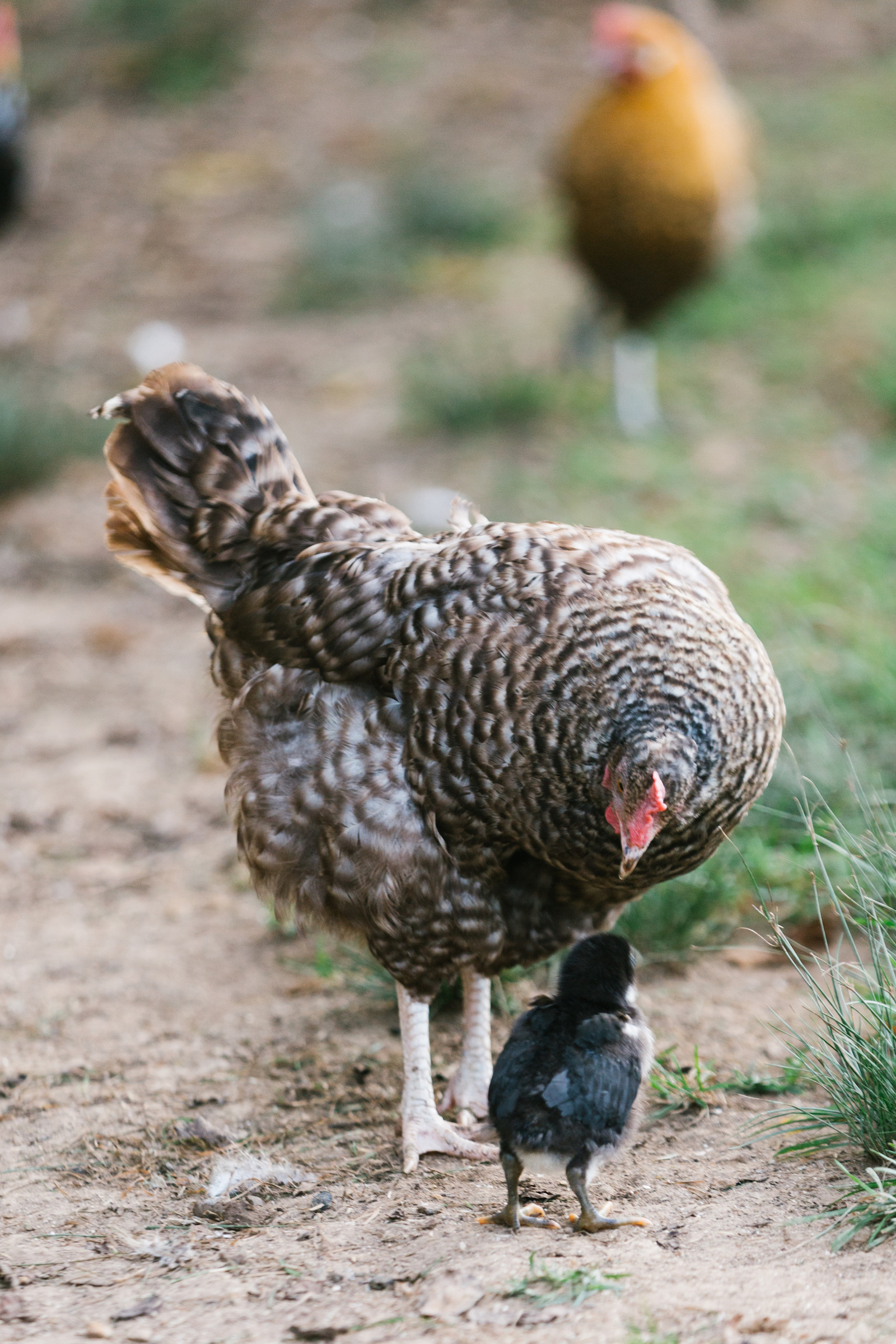
When a chick peeps before it hatches, the hen responds by making a short, low-pitched sound we call clucking. That’s how chicks learn to recognize the sound of their own mother’s voice. After the chicks hatch, they follow their mother when she clucks.
The hen shows chicks what’s good to eat by rapidly repeating a high-pitched food call. At the same time, the hen picks up and drops the food item in a process we call “tidbitting.” While she’s bringing the chicks’ attention to something to eat, she’s also breaking the food item into smaller pieces for her chicks.
How do you interpret a hen’s egg song?
I’m glad you asked that. I have no idea who came up with the idea of a hen’s egg song. What is typically described as the egg song is the laying cackle. It’s a series of short, sharp sounds some hens make upon leaving the nest after laying an egg.
Some people interpret that sound as bragging about having laid an egg. But more likely the hen hopes to startle any predator that may be lurking nearby. She’s also notifying the rest of the flock that a predator may have snuck up while she was occupied in the nest. Sometimes the other chickens start cackling, too — just in case.
Singing, on the other hand, is the sound of a happy hen. Usually the notes are rapidly repeated, although sometimes they’re drawn out. The purpose of singing is most likely self-amusement, like a person singing in the shower. As I’ve heard many people say, the so-called egg song sounds nothing like singing.
Roosters have their own language too, don’t they?
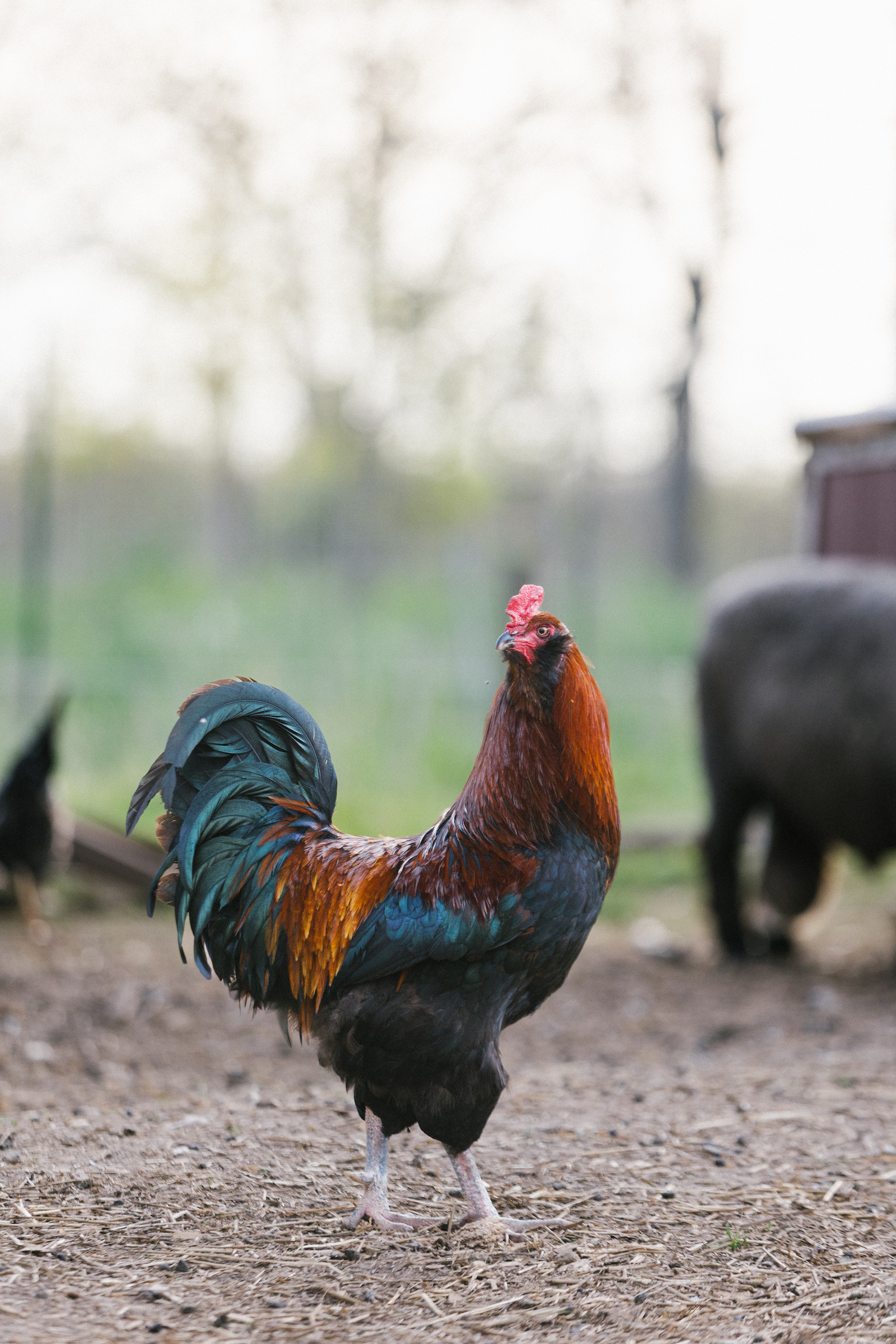
They definitely do. Roosters crow to assert their maleness. They food call and tidbit to attract a gathering of hens. They sound an alert while looking upward to notify the flock when something is moving overhead.
Cocks, more than hens, use a variety of sounds to warn of potential danger. They even use different sounds to distinguish between possible danger and immediate danger and between a predator on the ground and one in the air.
The alarm cackle — a brief series of short, sharp sounds followed by one loud, high-pitched sound — announces the approach of an apparent predator on the ground. This call increases in intensity the longer the assumed predator is in sight and may continue after the creature has gone. A hen sometimes makes the same sound when disturbed while on the nest.
When a rooster, or sometimes a hen, spots a raptor approaching, he sounds a loud air raid warning. This call usually prompts the other chickens to run for cover. Interesting to me is that vultures, crows, and light planes often fly low over our farm, yet our chickens know the difference between them and the predatory hawks, eagles, and owls that also frequent our farm.
Any final thoughts on translating fowl language?
Yes. We’ve only just touched on some of the sounds chickens make. But translating fowl language isn’t difficult when you understand the basic rules, which happen to apply to human language as well as to chicken sounds. As a general rule, brief, soft, repetitive low-frequency sounds are comforting. Loud harsh sounds with high frequencies signal alarm, while harsh sounds emphasizing low frequencies denote serious threats. It’s all in the inflection.

Gail Damerow has been keeping chickens for nearly 50 years and has written several books about them including Storey’s Guide to Raising Chickens, The Chicken Health Handbook, The Chicken Encyclopedia, Hatching and Brooding Your Own Chicks, and What’s Killing My Chickens. For more about Ms. Damerow, visit her blog at GailDamerow.com.
Gail Damerow’s headshot courtesy of Kathy Shea Mormino.
All other images courtesy of Nina Mullins.
Shop These Best-Selling Books by Gail Damerow
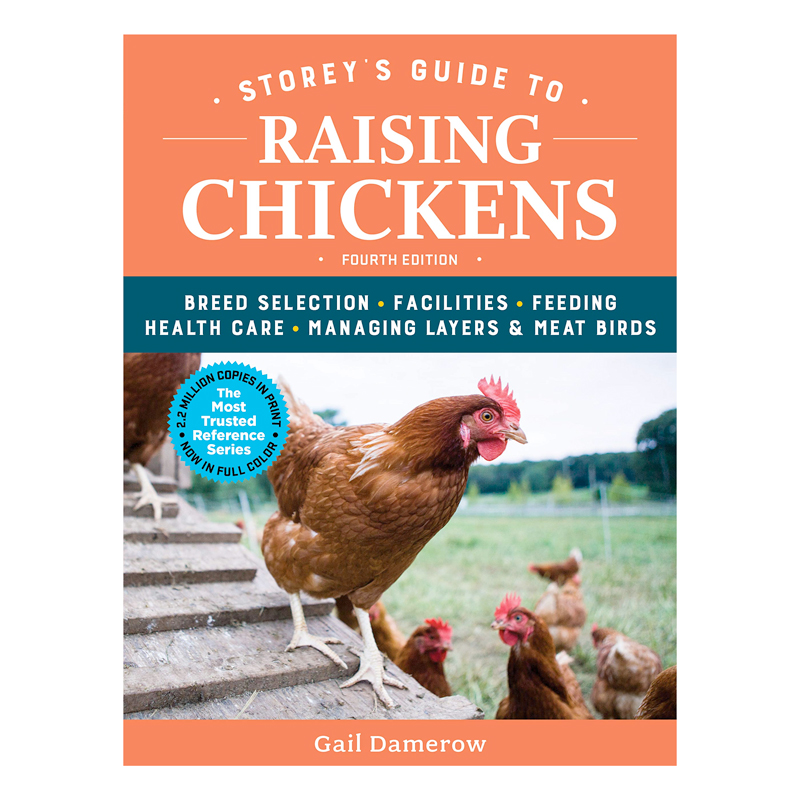
Storey’s Guide to Raising Chickens
The Chicken Health Handbook
What’s Killing My Chickens