
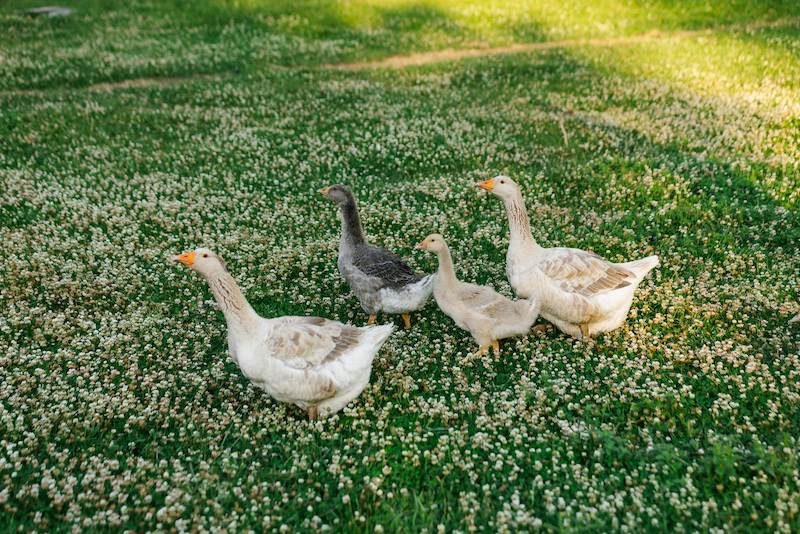
I grew up in a family of bird lovers. From hunting to bird watching, filling humming bird feeders and listening for birdsong over coffee, birds have always been a huge part of my life. Geese have long been a favorite of mine; I love listening to their calls and wingbeats each fall when they fly over our farm.
However, I had always heard that domestic geese were impossibly loud and difficult to keep, especially with rowdy kids running around. Last year, after meeting (and immediately adoring) a baby gosling at The Homestead Festival, I flew into research mode, poring over the different breeds we offer at McMurray Hatchery. Not long after, two Buff goslings were welcomed to our farm, and I’ve spent the last year learning and growing as a backyard goose keeper while falling in love with my little flock. Here are some of the most important things I’ve learned from my backyard geese along the way.
Learn the basics before getting started.
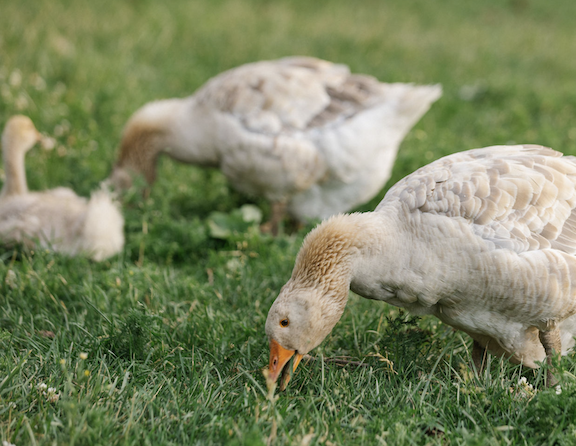
Geese are unlike any bird I’ve raised before. First and foremost, they’re extremely social creatures that form deep bonds. As such, I knew that I would want, at minimum, two geese together at all times. While some people find success with keeping only one goose as a guard for their chicken flock, I knew that I wanted my geese to have the opportunity to bond with one another.
Another important distinction is housing. Because of their size, geese need a large doorway to enter when going into their sleeping area at night. Rather than using a traditional chicken coop, I chose to have my geese sleep in their own private stall. This setup also makes cleaning their area very easy and allows plenty of space for nesting.
Did you know that an adult domestic goose’s diet is made up of roughly 80% grass and greens? Before bringing geese home, getting a good handle on their dietary needs is incredibly important so that they grow and mature correctly. For us, that looked like starting our geese on a high-protein starter and then gradually lowering their protein percentages as they aged. I also made sure they had access to fresh grass and weeds from the day they came home.
Find the right breed for your farm and family.
Because we have young children and our one-acre farm is nestled in a suburban neighborhood, I had very specific needs when it came to finding the right breed of backyard geese for us. I wanted a breed that was known for being a bit more quiet than others, as well as one that had a calm, docile temperament.
After a long period of research, I landed on the American Buff for their personalities. When raised correctly, they’re known to be gentle and calm, seeking out human interaction.
Hand-raise your goslings with intention.
Goslings all go through a process called imprinting, meaning they attach to their caregiver deeply during the crucial bonding window just after hatch. If your goslings imprint to you, it means they’ll be much more social and friendly towards humans in general.
When our goslings first came home, we spent a ton of time with them. They joined us in the garden, played in the yard with my children, and napped on our laps and in my apron pockets while I did dishes. In short, we put a ton of work into socializing them…but it never felt like work at all. We truly enjoyed their company and carted them around as much as possible during those early months when they were still small enough to do so.
Continue to build a positive relationship as your geese age.
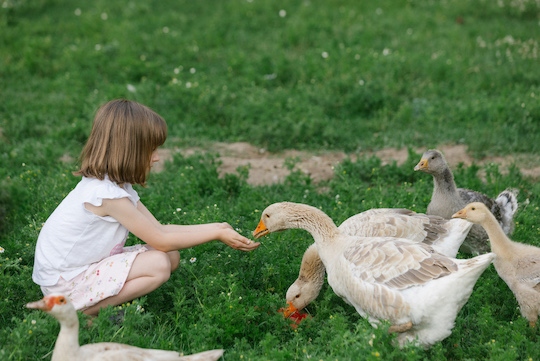
As they grew and became more independent, our goslings transitioned to sleeping outside, and we made sure to spend a lot of time with them in the pasture on a daily basis. Now that our geese are adults, they know that all good things come from their humans: grain, fresh water, special weeds and plant clippings, and their favorite treat…watermelon!
Even on my busiest of days, I try to spend a few minutes focused on the geese. I hand feed them a few bites of grain on my way to fill up feeders each morning. I also try to make sure I sit in the pasture with them after chores. They love to graze and nap nearby when I’m outside, and it gives me the opportunity to make sure they are behaving and moving normally.
Another fun thing we did this season was give our backyard geese, Honey and Ginger, two human-imprinted goslings to raise once they reached a few weeks old. We were very mindful and respectful of the girls if they wanted us to give the babies space, but for the most part, we had no issues and they let us scoop up the goslings and cuddle them on a regular basis.
Keep your expectations reasonable.
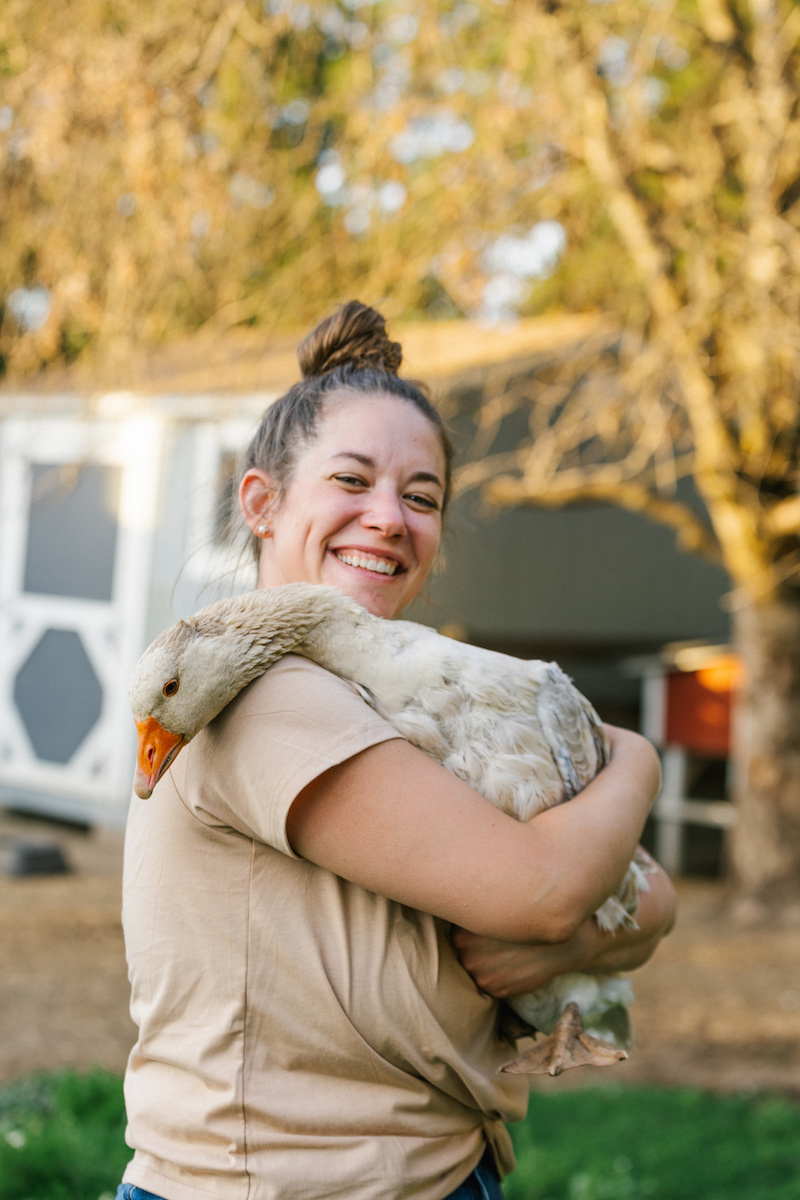
At the end of the day, a goose is still a goose. They honk, hiss, and have minds of their own when it comes to just about everything.
Though our girls are much more quiet than other breeds, they still call out to us to say hello when they see us. If you’re worried about noise, pick a breed that’s known to be on the quiet side of the spectrum, and keep your numbers low. I think starting with a pair of female Buffs or Pilgrims is a fantastic place to start.
Even if you hand-raise and imprint your goslings, they are still geese. They might not like you trying to collect their eggs or touch their goslings, and that’s okay! There are ways to work around those boundaries in a respectful way. One thing I am always mindful of is to try and collect eggs when my girls are off their nests. If a goose is broody, I am calm but firm in removing her eggs from under her or encouraging her to get off the nest. Finally, I never ask or allow my kids to disturb our girls when they’re sitting on a nest, and always remind them how important it is to never chase the geese.
Enjoy the eggs!
Over the years, I have raised quail, chickens, turkeys, and a variety of duck breeds for eggs. In our family, we have special dishes associated with each type of egg…quail eggs are for hot cocoa, chicken eggs are the general jack-of-all-trades, duck eggs make fantastic baked goods, and turkey eggs are for chocolate cake and bacon omelets. Goose eggs are no exception! We love them in pancakes, pudding, and sugar cookie bars most notably.
Geese are very seasonal layers, often laying from late winter into spring. Our geese ended up being really amazing layers from about February through June, giving us about two eggs a day during that time. An interesting thing to note is that geese will peak as layers from about 3-5 years of age, but can continue to lay for 10 or more years. That’s a lot of eggs! I suggest playing around, finding your favorite goose egg recipes, and looking into how to preserve their eggs for the off season.
All photos courtesy of Nina Mullins.
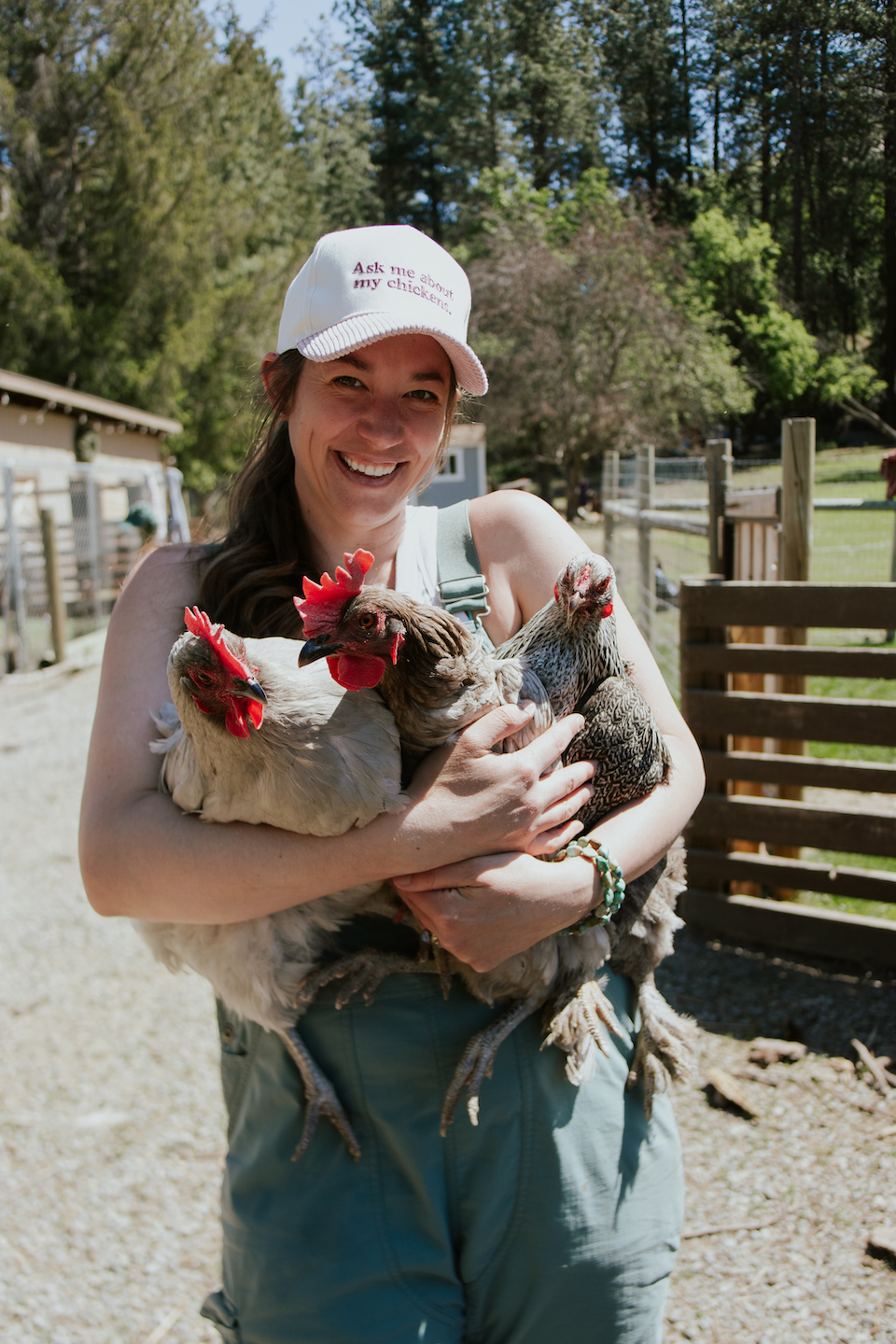
Cassidy Cornell is a mama, homemaker, and backyard poultry enthusiast living in Eastern Washington. Cassidy is the author of The One Acre Homestead, where she encourages other to raise and grow their own food, no matter the size of their property.
Buff Goose Spotlight:
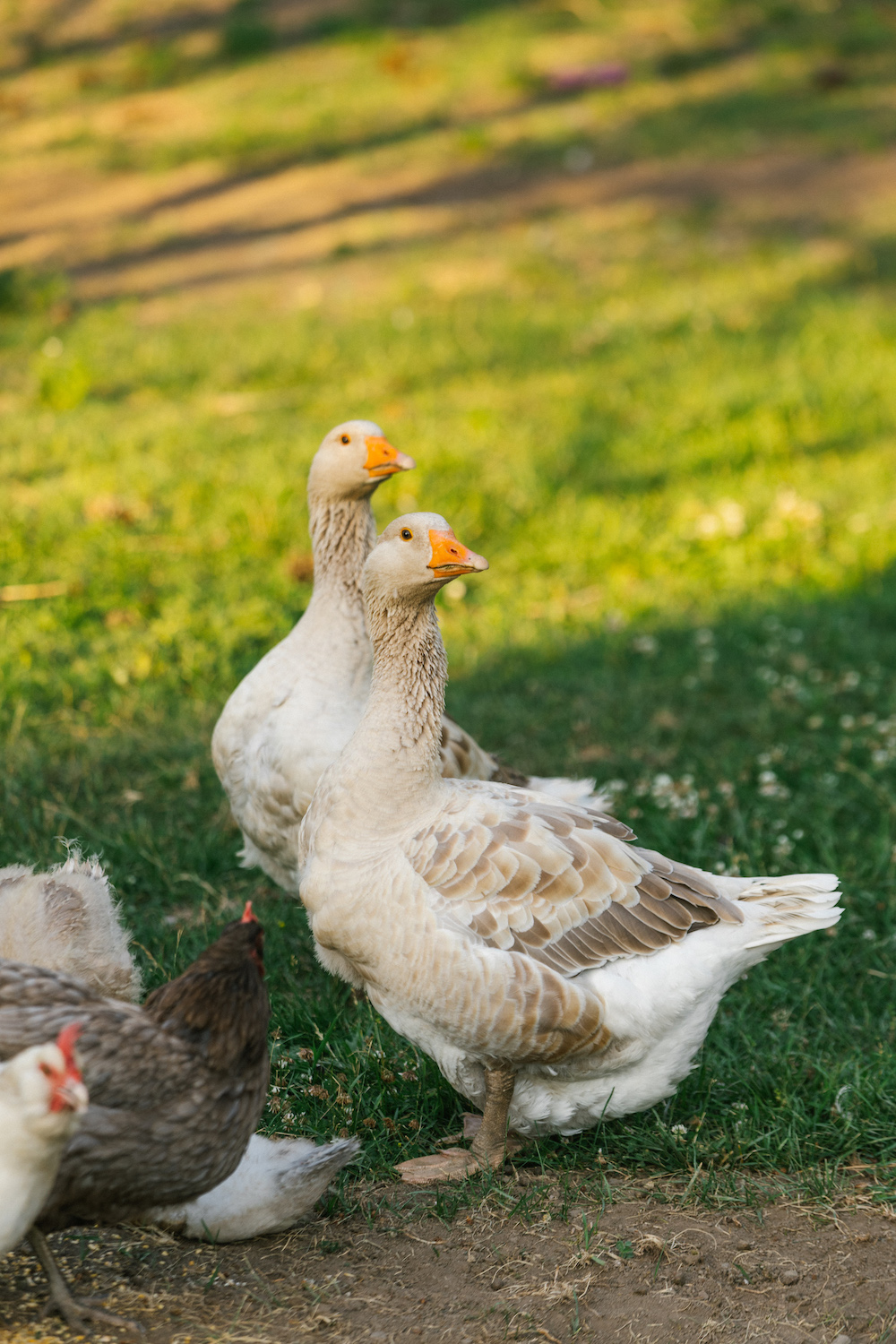
Color: Soft creamy buff feathers with a white underside, orange bills/feet, and light brown eyes
Size: Males 18lbs./Females 16lbs.
Laying: Females will lay about 10-25+ eggs per season, which is typically quite short
Eggs: Large, white
Broodiness: Females have a high tendency to become broody and are known to be excellent mothers to their baby goslings
Personality: Friendly, curious, docile
Uses: Eggs, meat, and predator alerting
Lifespan: 15-25 years if cared for properly