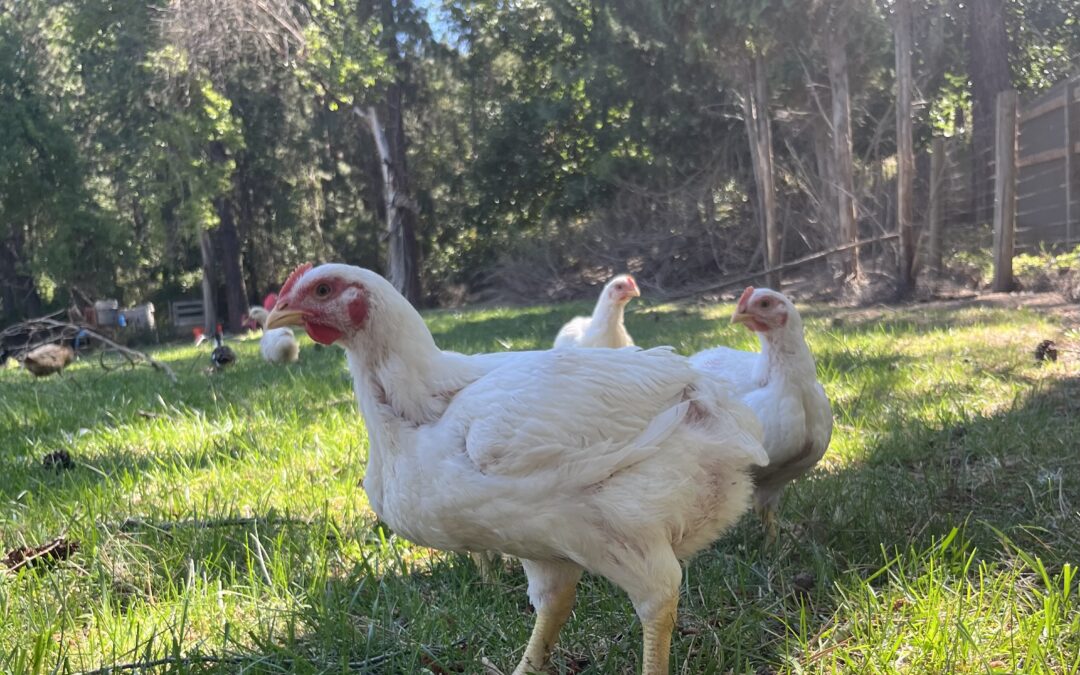
By and large, when most people think of raising meat birds, large commercial operations come to mind. However, I’m here to tell you that you can raise meat birds on a smaller scale, right in your own backyard. You don’t have to raise enough to sell them, and you don’t have to pack your freezers full. It’s perfectly okay to raise smaller batches to feed your family. Here are my top tips for raising broilers in my backyard:
Choose the broiler breed that suits your needs.
Because we’re farming in a small space, we need a tight turnaround time, plain and simple. Our family also prefers a traditional table bird with ample white breast meat, so Cornish Cross are the perfect bird for us. They suit our space, needs, and tastes perfectly.
That being said, if you prefer dark meat or more active birds (though I have more to say about that later!), consider Murray’s Big Red Broiler. And, if you’re at a higher altitude, Murray’s Ginger Broiler is a better choice for you.
At the end of the day, the best broiler breed is the one that you like raising and eating.
Start small and work your way up.
The first year that I raised Cornish Cross in our backyard, I started with 35 birds. While that might not seem like a huge number to most, it was a lot for me, as I was new to raising broilers. And, more importantly, it was a pretty large number for our space, as we farm on just an acre in a suburban neighborhood.
If I could go back and do it again, I’d tell myself to start small. In fact, that’s the advice I give to fellow backyard homesteaders when I travel to homesteading events across the country with McMurray Hatchery. Starting with even just 10-15 broilers for your first time, especially in a small space, allows you to get your feet wet without becoming overwhelmed. One way I like to raise a larger amount of broilers for the freezer while saving my space and sanity is to raise two smaller batches, with one being processed mid-summer, and the other hitting the freezer right before fall arrives.
At the end of the day, 10 birds in the freezer means you didn’t have to buy 10 birds at the store. You don’t have to build Rome in a day!
Choose the right equipment.
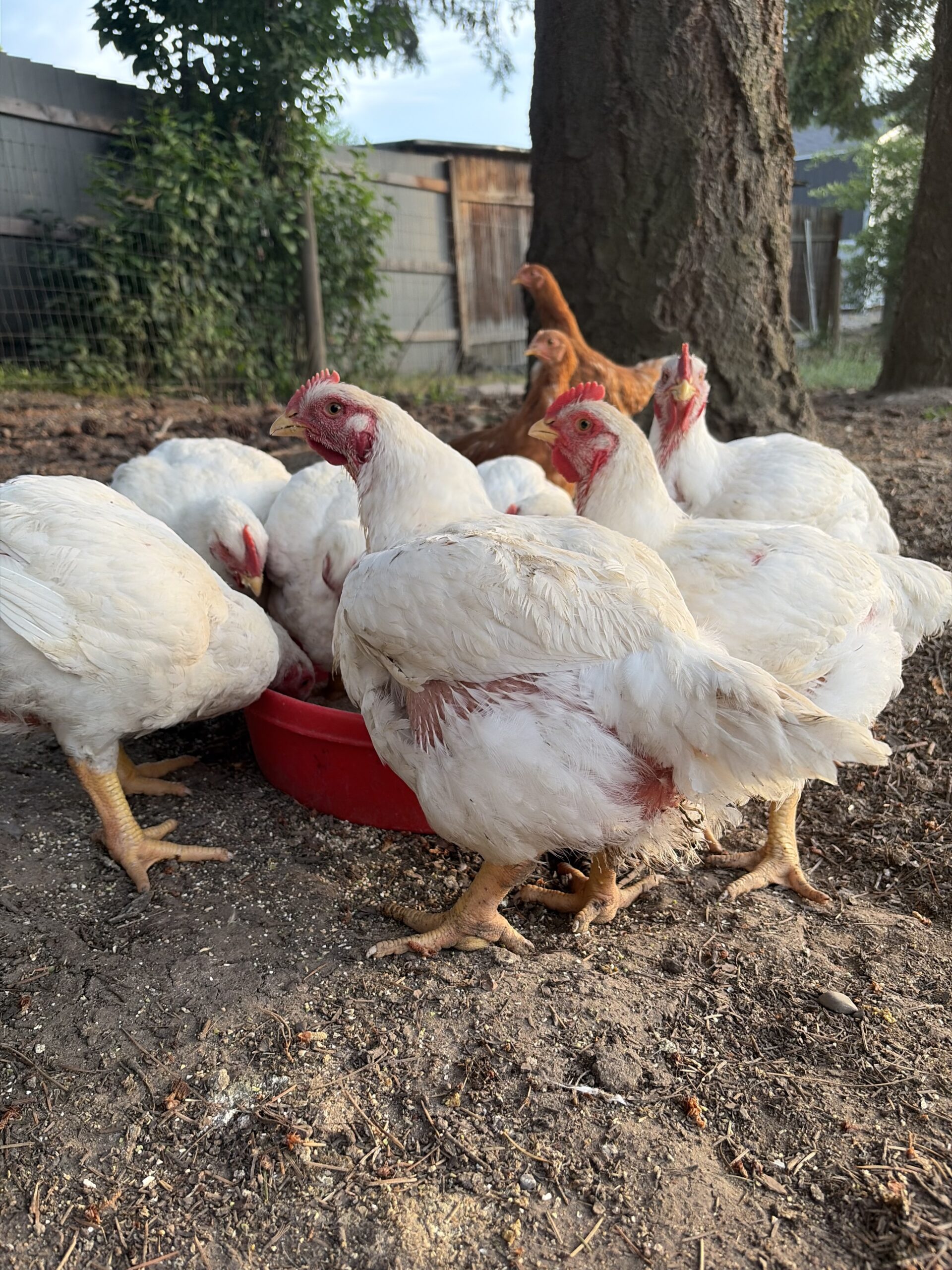
From day one, it is of the utmost importance that you make sure your meat birds have adequate access to fresh, clean water and ample feed. You also have to make sure that your broilers have enough space at their feeders and waterers, so that no one is getting pushed out and eating or drinking less than they should be. And, of course, they need to be kept safe from predators.
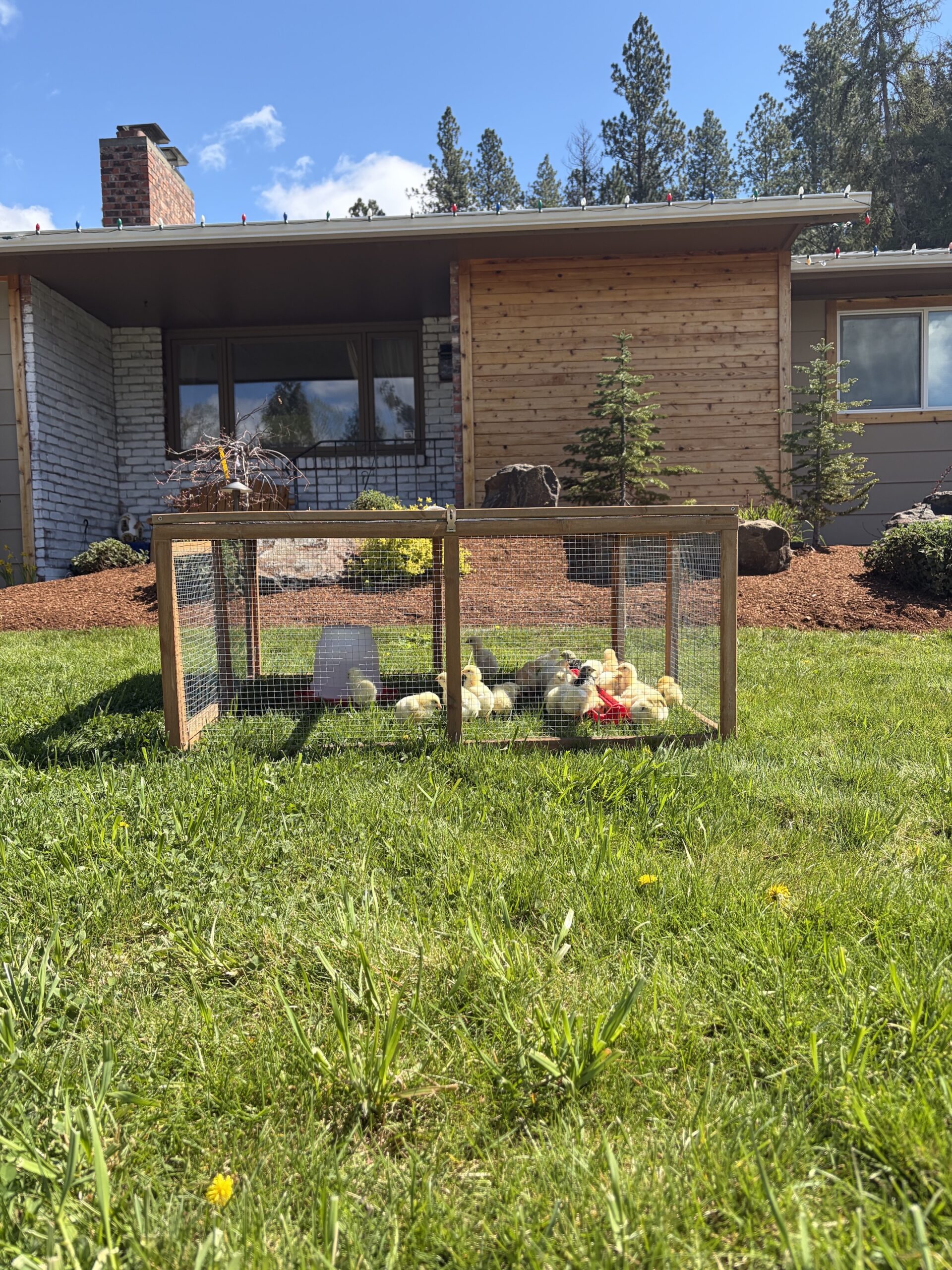
Once my Cornish Cross are out of the brooder, they move into a secure 6ft.x8ft. welded wire dog kennel with mesh hardware cloth at the base, which ensures they can’t escape when they’re little, and nothing can reach in to get them when they’re locked up at night.
Poultry netting is a great option to keep your birds safe from predators, but ours free-range in our backyard pasture with roosters, geese, turkeys, and an LGD as their protectors.
I prefer traditional trough-style feeders, as they’re the easiest option for soaking feed in fresh milk from my goats. I like to line them up side by side in a long line so that every single meat bird can eat at the same time. I also place multiple nipple waterers around my pasture so that my broilers always have options for getting water.
Teach them how to chicken.
A lot of people like to complain and say that Cornish Cross are “Franken-Chickens” with no foraging abilities or instincts, but I think that couldn’t be further from the truth! My Cornish Cross forage, run, dust bathe, eat bugs, and generally behave like normal chickens.
How do I get them to do it? I let them. I try to get my broilers out on grass as soon as possible, and I sprinkle feed around to encourage them to peck, forage, and explore. Beyond that, I give them the space to be chickens. The only time my broilers are locked up is overnight, so during the day, they have more than enough space to bop around the pasture. I also strategically place my feeders and waterers apart from one another to encourage my birds to continue moving, even when they’re getting close to processing weight.
One drawback to fully free-ranging my meat birds is that the extra movement means they often need a little bit of extra time to grow out, which is a tradeoff that I am more than happy to make. While most folks process at around 6-8 weeks, I find that my Cornish Cross are the perfect size right around 10-11 weeks.
Use the right feed.
Cornish Cross have been selectively bred over many generations to thrive on corn and soy, both popular staples in today’s modern agriculture. For years, I was bent on using corn and soy free feed for my broilers, primarily because my mom has a corn allergy, and I want to raise chicken that’s safe for her to eat. In the past, my largest Cornish Cross weighed in right around 5.5lbs.
However, this season, I found a corn free broiler feed that included organic/non-GMO soy, and decided to give it a try…and boy, did it make a difference! My average size this season was about 6.5lbs.
In addition to finding feed that works best for you, I’m a big proponent of soaking feed for your flock. Chickens can’t properly digest their feed or absorb nutrients if they’re dehydrated, which can be detrimental to your broilers’ growth rate. Soaking their feed provides extra hydration, while also ensuring that they eat the entirety of their rations, rather than letting them pick out the bits and pieces they like the most. Because I raise dairy goats, I like to soak our broiler feed in fresh milk, which provides an extra boost of healthy fats, proteins, and carbohydrates in addition to vitamins and minerals. If you don’t have access to milk to soak your feed, water is also a great option.
Find a processor if you want to.
I think a lot of people are really adamant about raising and butchering animals on their own property, and I completely understand why. On the other hand, I think having such rigid ideals can make raising broilers on a smaller scale feel out of reach. To be completely honest, butchering our birds just isn’t something I’m interested in taking on, and I’m more than happy to outsource that job to people in my community that do it professionally. On processing day, I load my meat birds up into transport coops and drop them off to be butchered. Then, when they’re done, I pick them up and put them straight into my own freezer.
Let this serve as your reminder that you do not, in fact, have to butcher the birds you raise if you don’t want to.
Have fun in the kitchen.
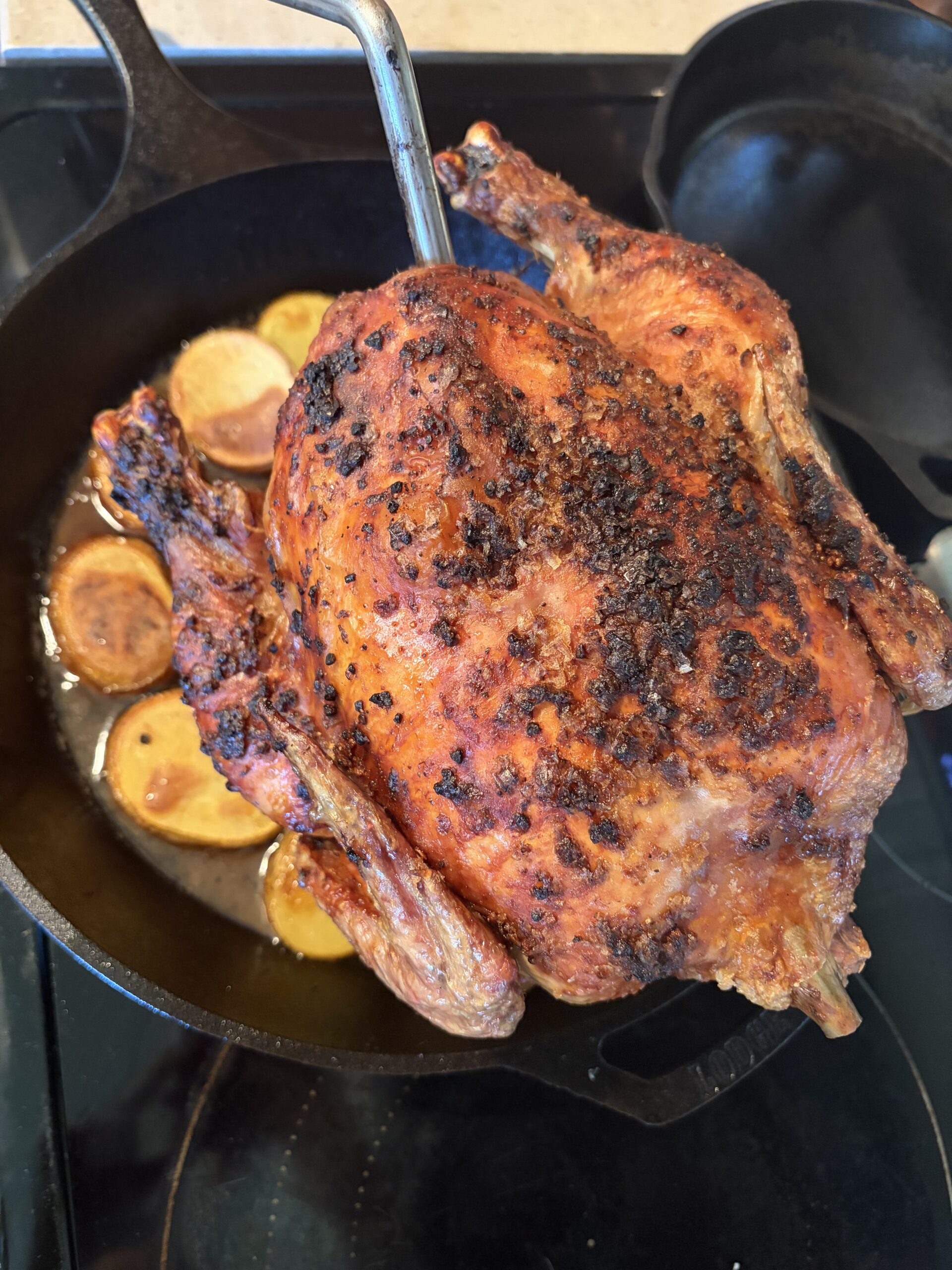
Raising meat birds in the backyard is only part of the equation. Cooking them, sharing them, and enjoying the nutrition they provide is what really makes this a full-circle experience.
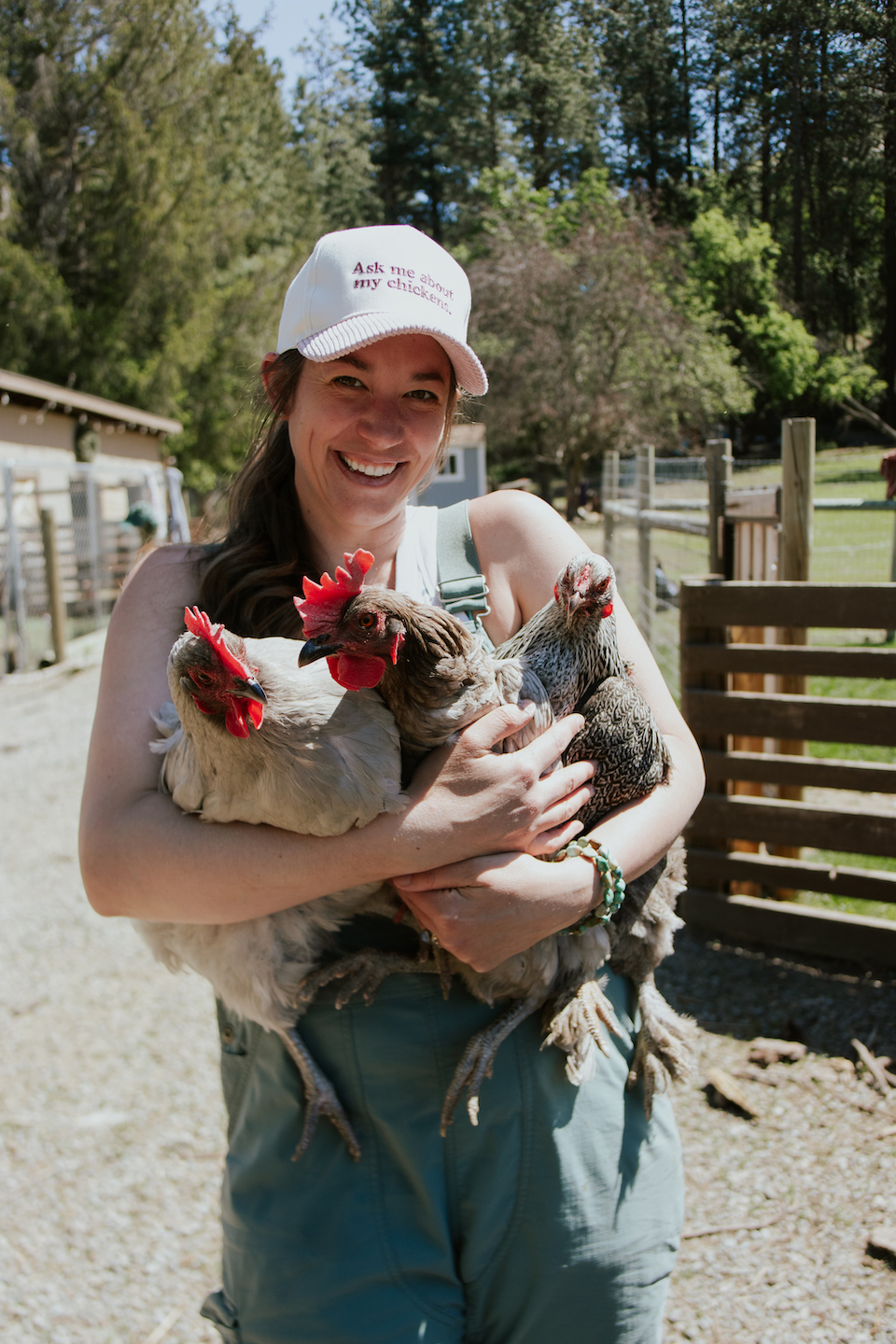
Cassidy Cornell is a mama, homemaker, and backyard poultry enthusiast living in Eastern Washington. Cassidy is the author of The One Acre Homestead, where she encourages other to raise and grow their own food, no matter the size of their property.